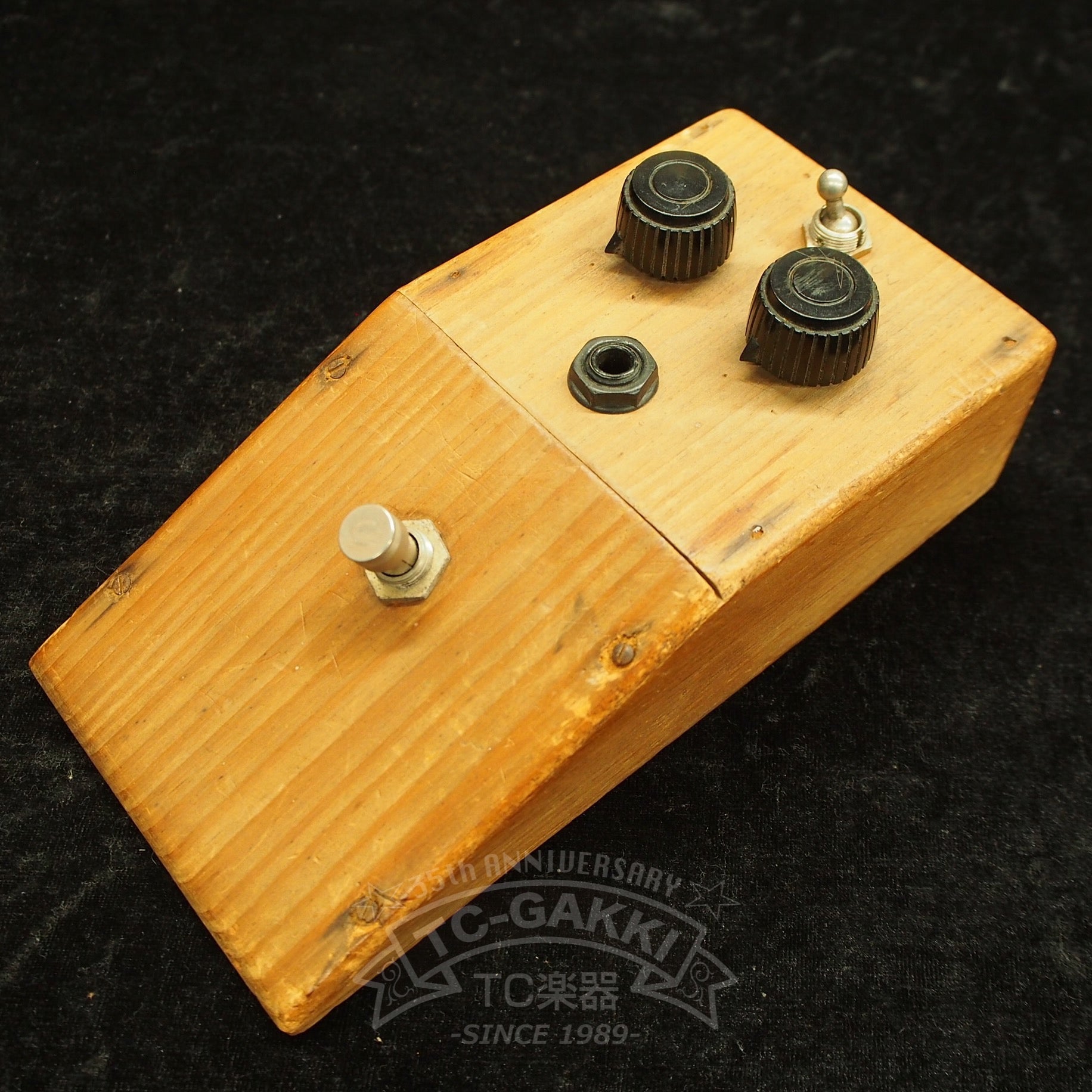
This is a wooden Tone Bender by Gary Hurst—reportedly one of only about 10 prototypes ever made!
The Tone Bender is a pedal consisting of a circuit featuring three transistors, based on the Gibson Maestro Fuzz-Tone.Even today, countless replicas are being made, and it continues to have a tremendous influence on later fuzz pedals and other effects. Gary Hurst, an engineer, began manufacturing and selling these around the summer of 1965. The early models were housed in a wooden case reportedly made by his brother. This was a prototype; later versions used a gold-finished, foldable steel enclosure.
Dimensions: 20 × 15 × 5 (cm)
Weight: Approx. 275 g (extremely lightweight for a pedal)
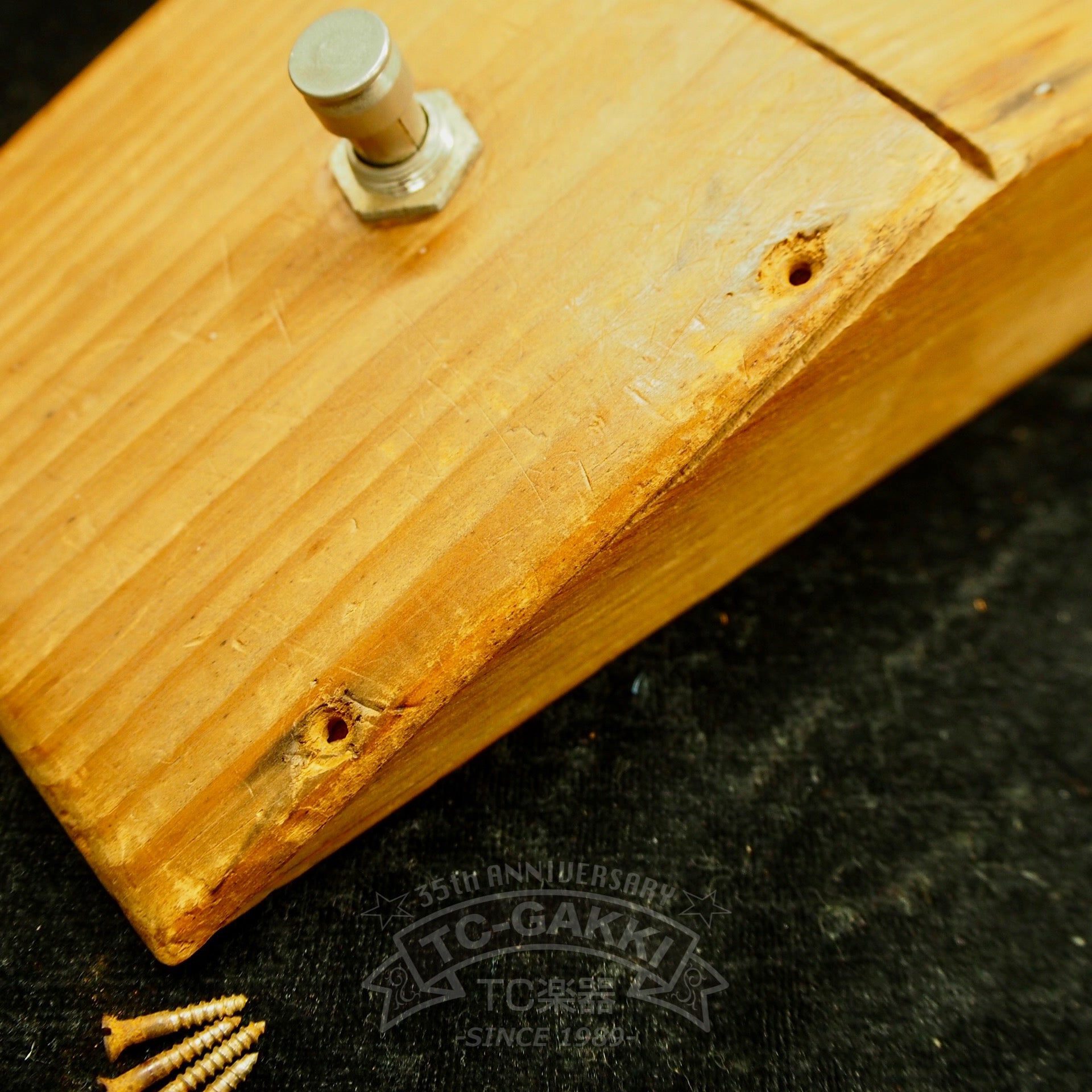
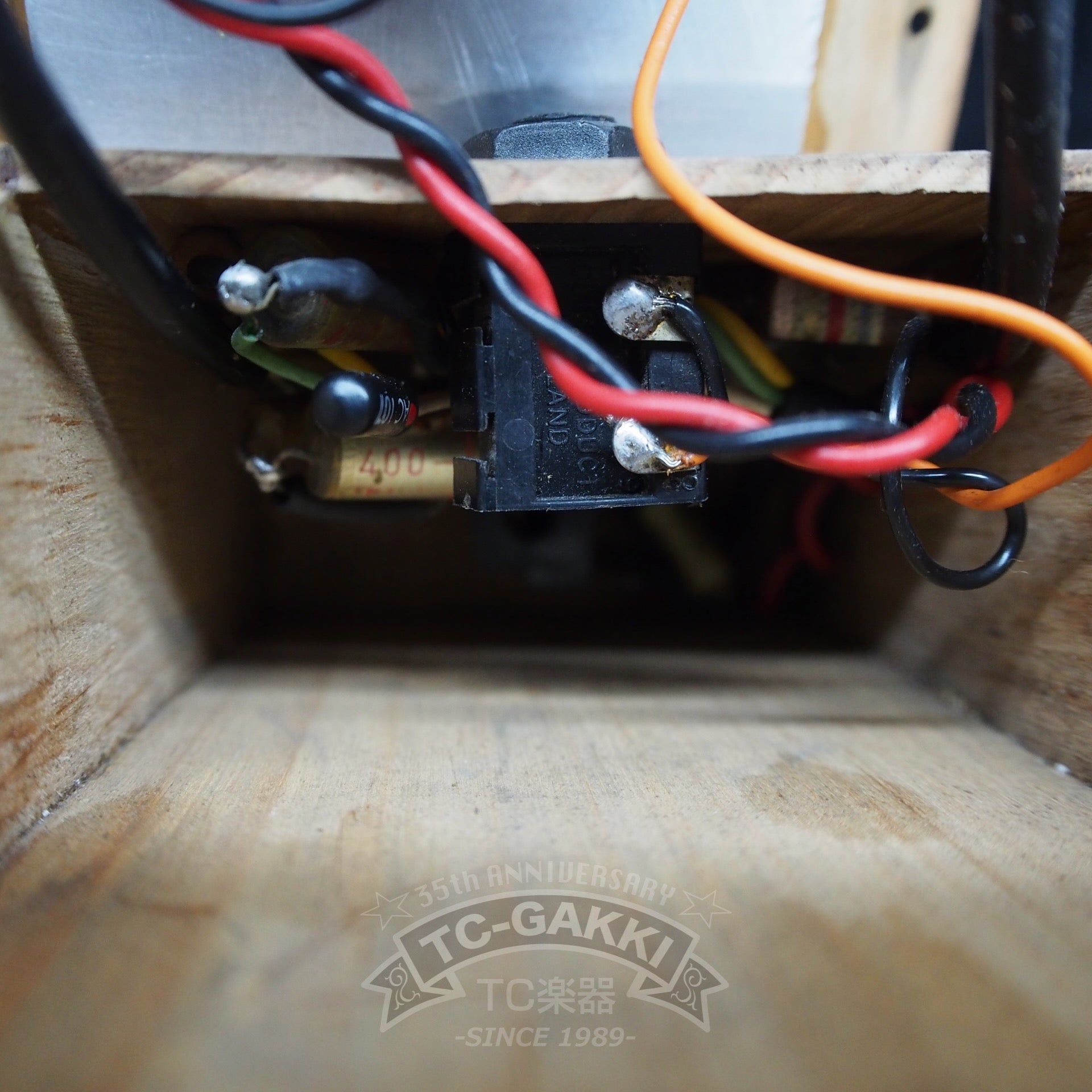
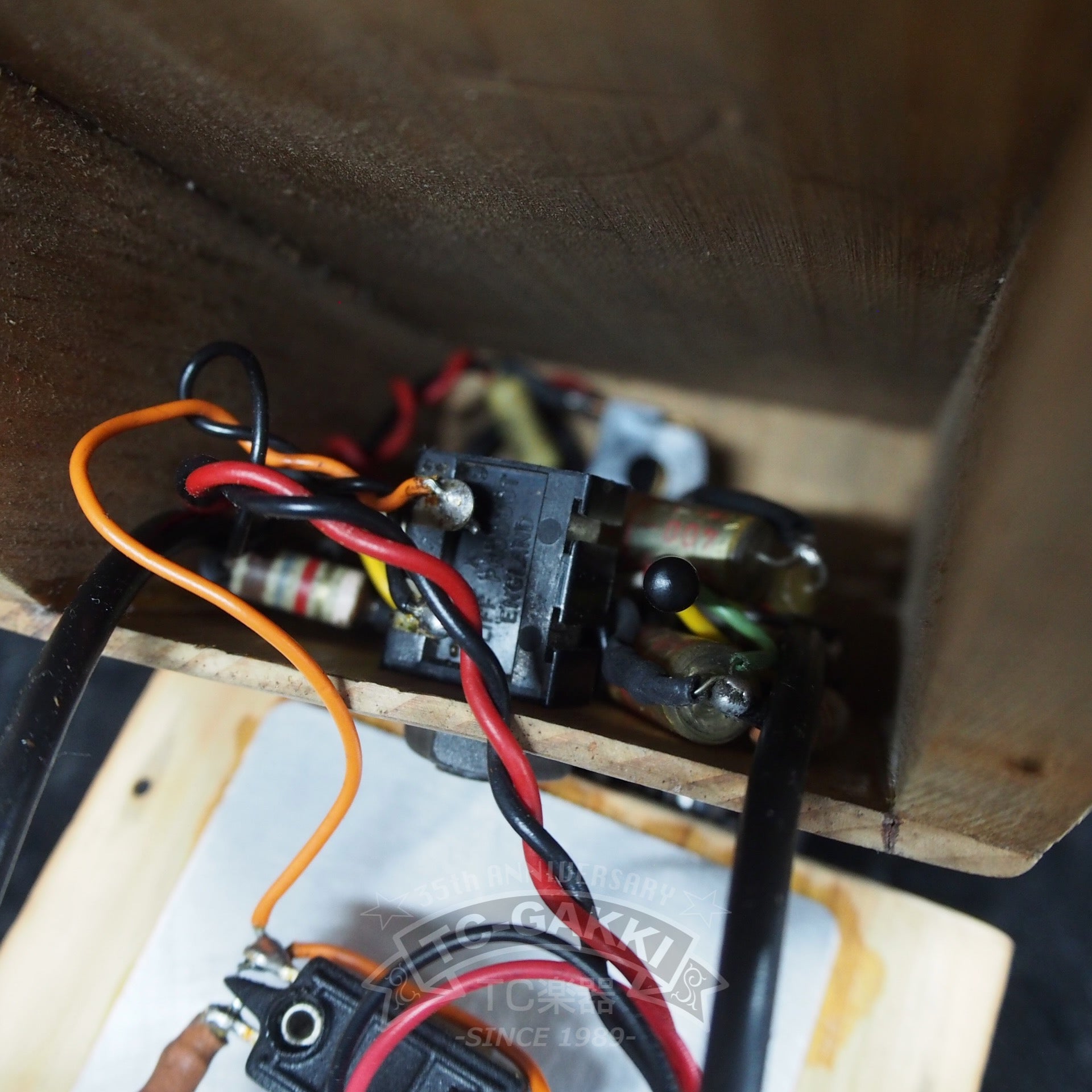
Material: The type of wood is unknown, but the grain is clearly visible, and while it’s very light, the quality is far from what one would call “high-end” based on the wood’s feel. However, it has an outstanding presence! First of all, I was surprised by how perfectly precise the case dimensions are: 20/15/5 (cm).It’s unpainted and has no logos, giving it the warmth characteristic of wood. The housing is assembled with what are commonly called wooden dowels, and the top section—where the parts are mounted—makes it nearly impossible to inspect the fine details inside unless the unit is completely disassembled. Consequently, I had quite a hard time taking photos of the interior. The battery cover, which includes the footswitch, is secured by four wood screws; to replace the batteries, you must remove those four screws to open and close the cover.There’s a metal plate on the back of the battery cover for reinforcement, but it flexes slightly when you turn the switch on and off, so I’m always on edge, worried it might crack. I’ve seen images of units with silver knobs, but this one is equipped with black plastic ones. The surface feels nice to the touch and is polished to a smooth finish. Since it’s simply assembled from thin wood, it has a delicate feel that makes it seem like it could break at any moment, so I have to be extremely careful when handling it.
The volume is quite high; the ATTACK (right) control starts producing plenty of distortion around the 9 o’clock position. Turning it past that point doesn’t seem to make much difference in the amount of distortion. When cranked all the way up, it unleashes a jarring fuzz sound that feels like it’s piercing the top of your head. The sound from the front pickup, in particular, is sweet and mellow, with authentic, organic nuances that transport the player back to the music scene of the 1960s.With ample gain and sustain, I was particularly impressed by the crisp, gated, choppy, and richly textured sound that cuts through the mix exceptionally well.I’ve played countless MkI replica models, but I think this sound clearly sets itself apart from them. It responds exceptionally well to the guitar’s volume control, and the bell-like clean to crunch tones when the volume is rolled back are absolutely superb. Personally, I’ve never experienced anything better than this!! (Note: Since it uses germanium transistors, I’ve confirmed that the “gated” effect becomes more pronounced when the temperature is quite low.)
Click here to read a column by our staff member Sano.
Era: 1960s
Accessories: None
Handled by: Sano
*The warranty period is one month from the date of purchase.
[We’re currently offering enhanced trade-in values!!] We pay top prices for everything—from current bestsellers and high-end boutique items to rare and niche pieces! If you’re thinking of selling right away, or if you’re unsure about an appraisal from another store, please don’t hesitate to contact us!