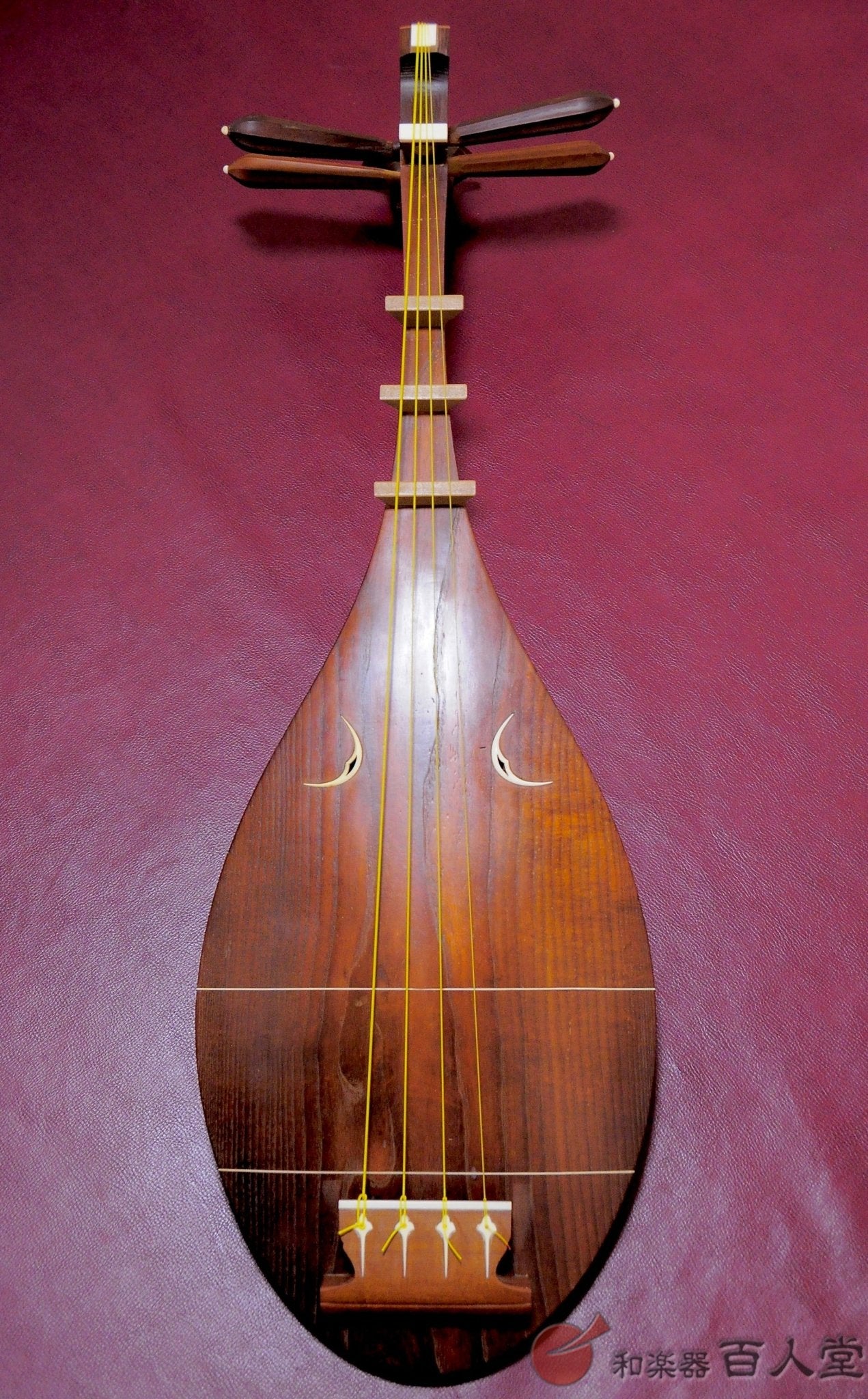
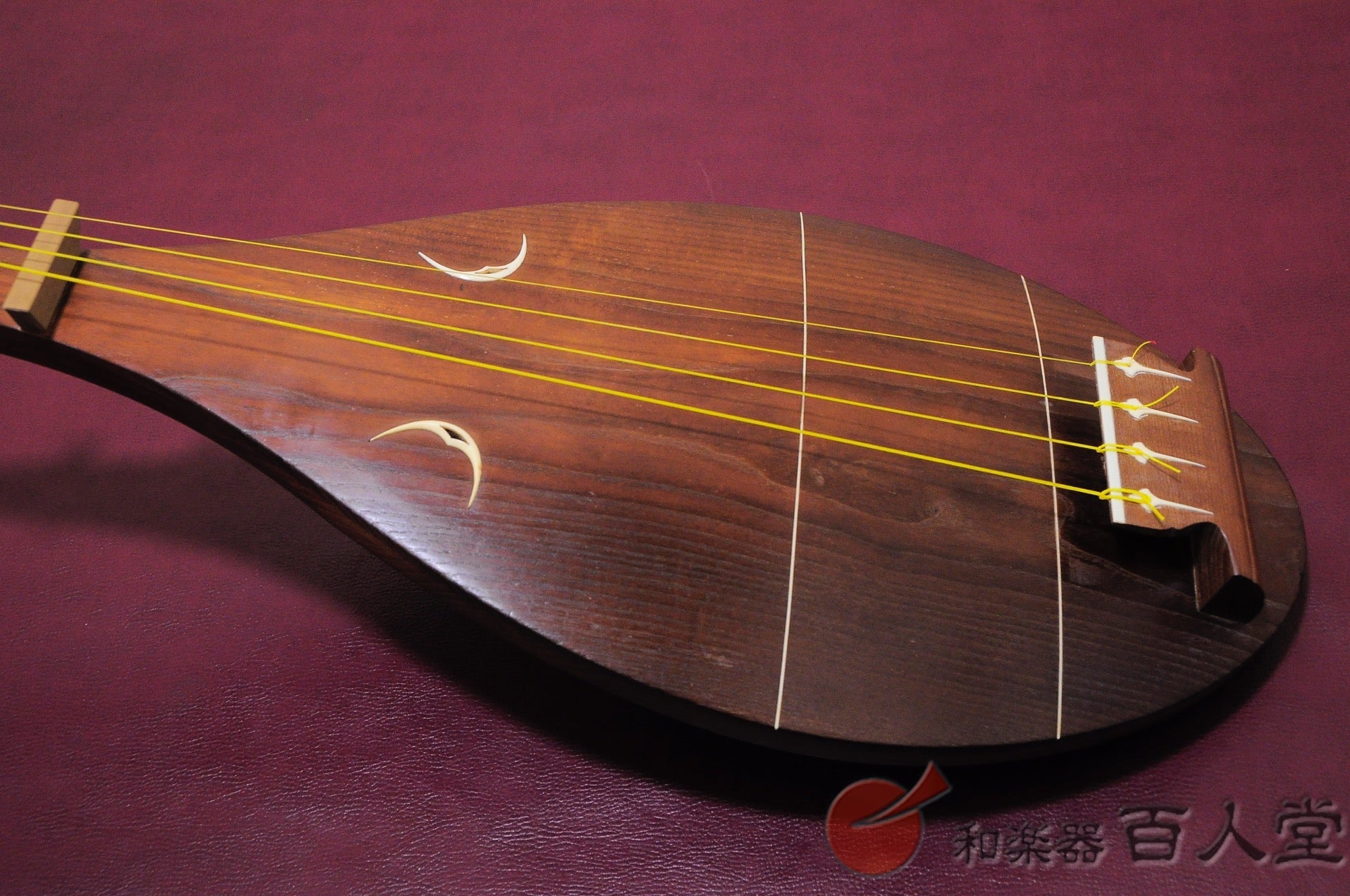
Satsuma biwa with four-stringed mulberry woodwind instrument by Usuke Hayashi, a master of modern biwa.
[Overview]
Satsuma biwa by Hayashi Tsuki (Hayashi Usuke). Four-stringed, four-poster. Made in 1921. Weight 3,400 grams. The maximum width of the body is 315mm and the thickness is about 55mm. Accessories: plectrum (with sheath, 233 mm wide, 109 grams), cover (made of old Kagoshima mulberry wood), original.cover (old mulberry wood from Kagoshima), original handkerchief Case is not included.
[Condition.]
The covering hand, tumbling, and two thread rolls (two brightly colored) are based on the original,The original was faithfully reproduced using old mulberry wood from Kagoshima prefecture, about 100 years ago.The ebio portion of the tengin was missing prior to restoration, but the biwa workshop that restored the piece was able to restore the ebio portion of the tengin."The neck was also adjusted for torsion. In addition, the twist of the neck was adjusted,The neck was adjusted for torsion, the ivory mouth (made from used ivory) was replaced, the bamboo soot was replaced on the toriguchi, and the height of the pillar was adjusted, installed, and the pillar was replaced,Half-moon right side special order, all threads replaced (including broken threads). (There is no warranty after purchase, including thread breakage. Please understand in advance.)
[Features & Attractions]
This is a total mulberry satsuma biwa made by Usuke Hayashi, a modern biwa player and a master craftsman. The belly and back plates, which determine the tone of the biwa, remain as they were when the biwa was made. Although it has been completely drained of water after more than 100 years, it still weighs a hefty 3.4 kilograms. The high quality of the Kagoshima mulberry wood, which is currently unavailable, is evident. Since the instrument has been unplayable for a while, the sound is a little inward, but the deep tone with weight is exceptional. The deep tone with weight is exceptional. You can enjoy the changing sound as you play this gem.The neck of the biwa has been carefully restored and adjusted as a musical instrument by a modern biwa maker, including its twisted neck, so it is perfect as a tool.