















Explanation
Martin / 1975 D-28
[Staff Comment: Inoue]

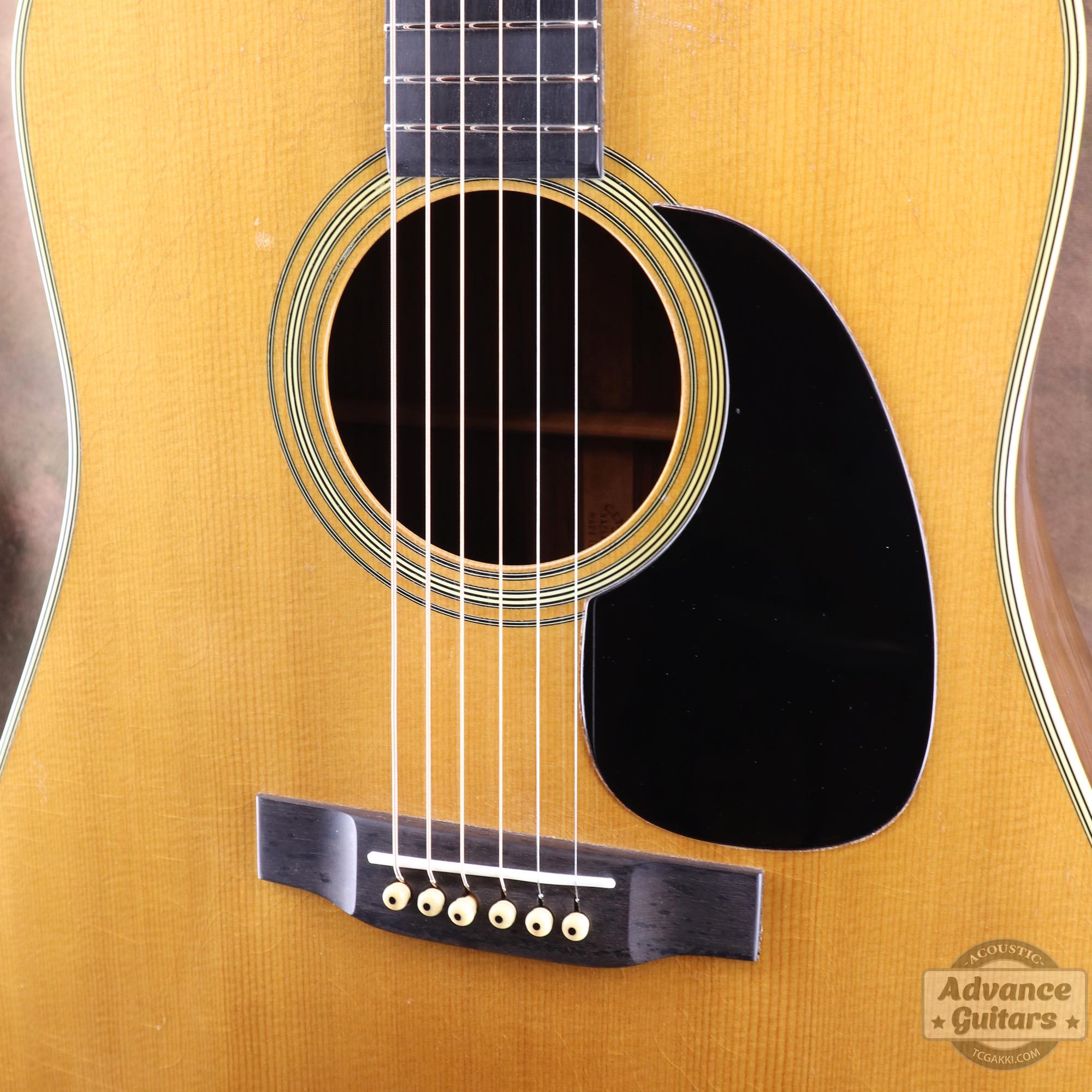
This guitar captivates with the robust, resonant strumming sound characteristic of the Square Rod era, combined with a deep, rich tone that has matured over nearly half a century.
While its appearance exudes vintage character, it has been expertly set up by skilled craftsmen, delivering a surprisingly comfortable playing experience even for modern players.
Our in-house repair team, TC-TUNE, will provide a detailed introduction to this instrument—which combines “the wonderful resonance inherent in vintage guitars” with “stress-free, supreme playability”—explaining its true value and why we recommend it.
We hope you’ll take a moment to read on.
[Recommendation from Our In-House Repair Team, TC-TUNE]
Have you ever played a Martin with a reset neck?
You might think, “It’s a vintage guitar, so it’s inevitable that it’ll be a bit hard to play,” or “I’ll have to compromise on playability to some extent,” but that’s absolutely not the case.
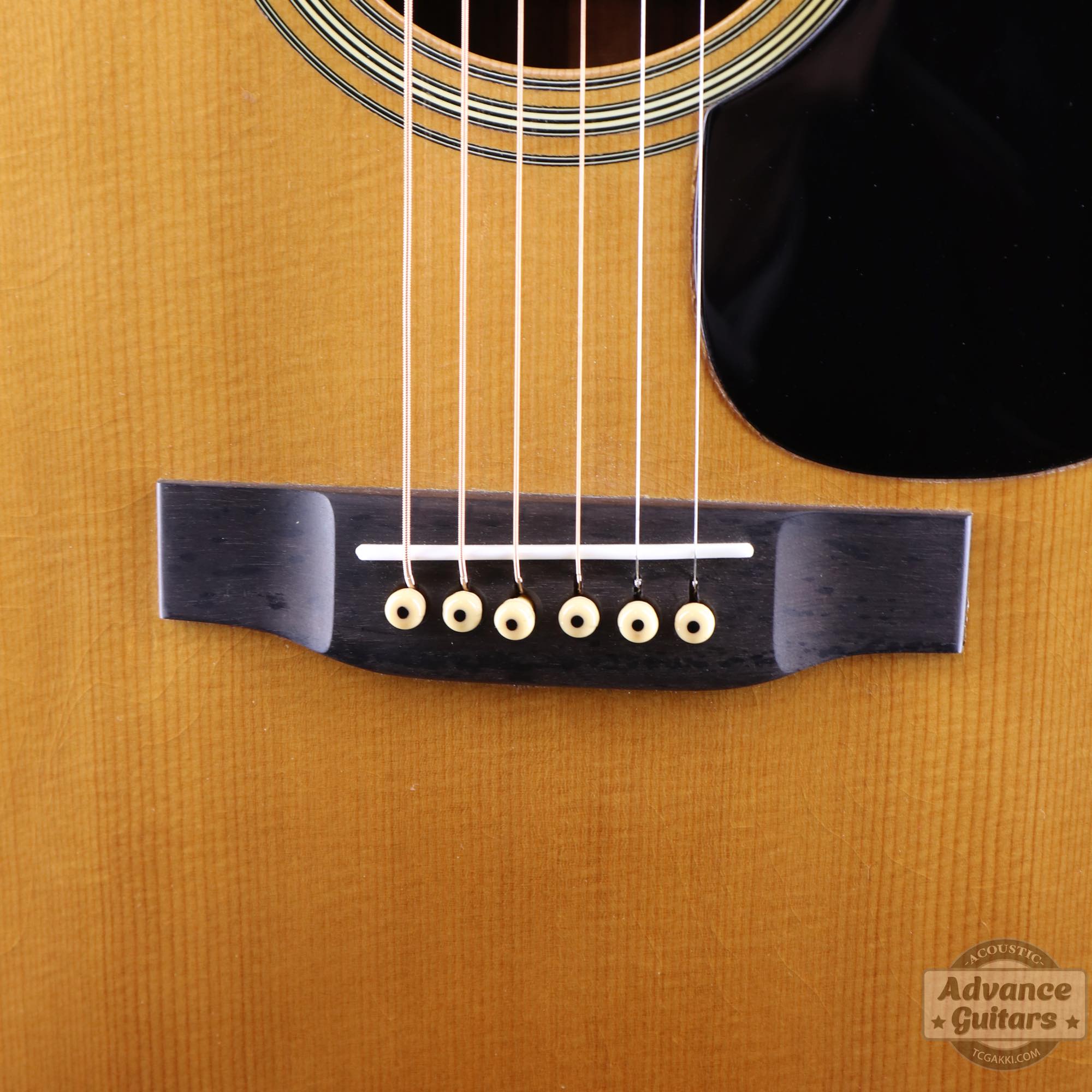
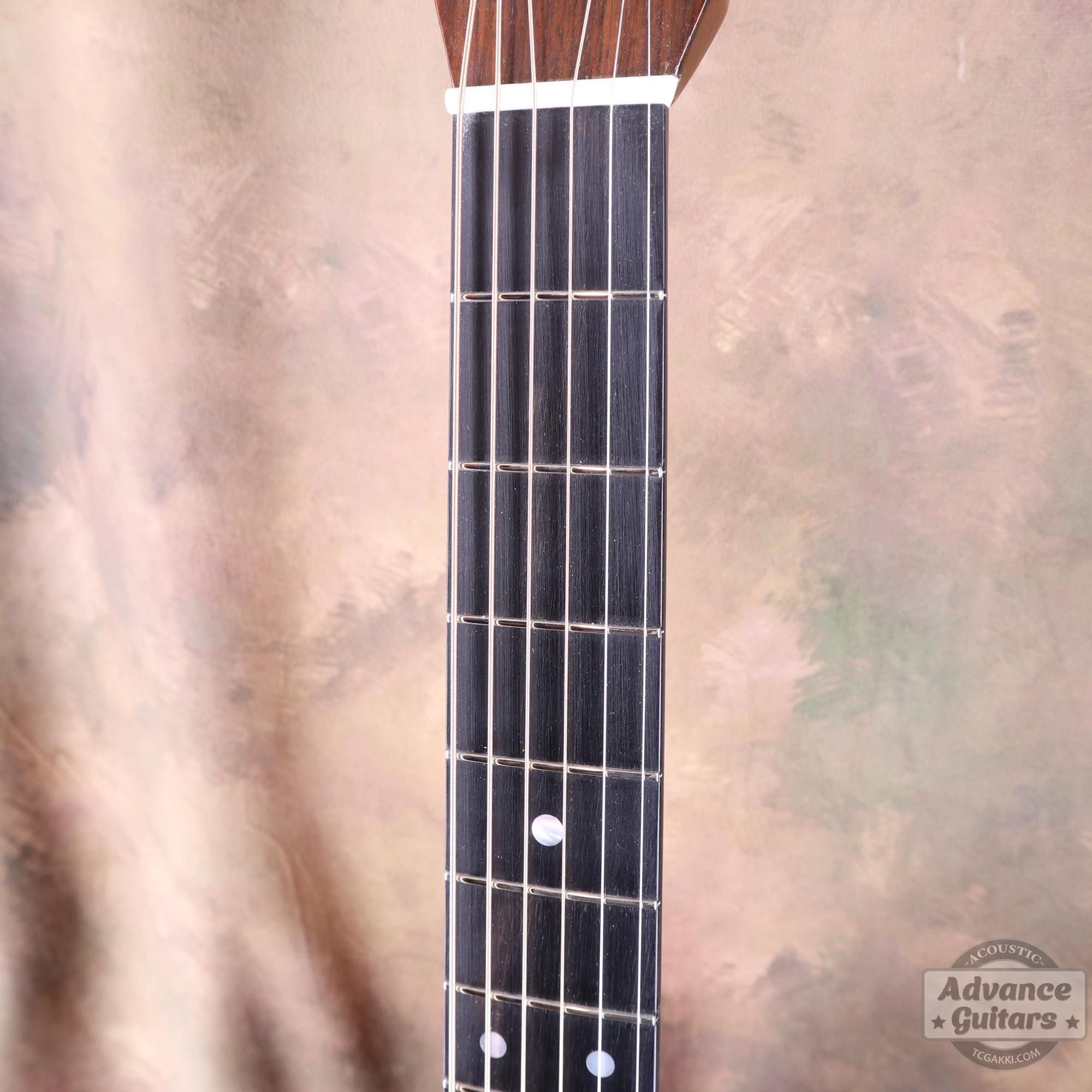
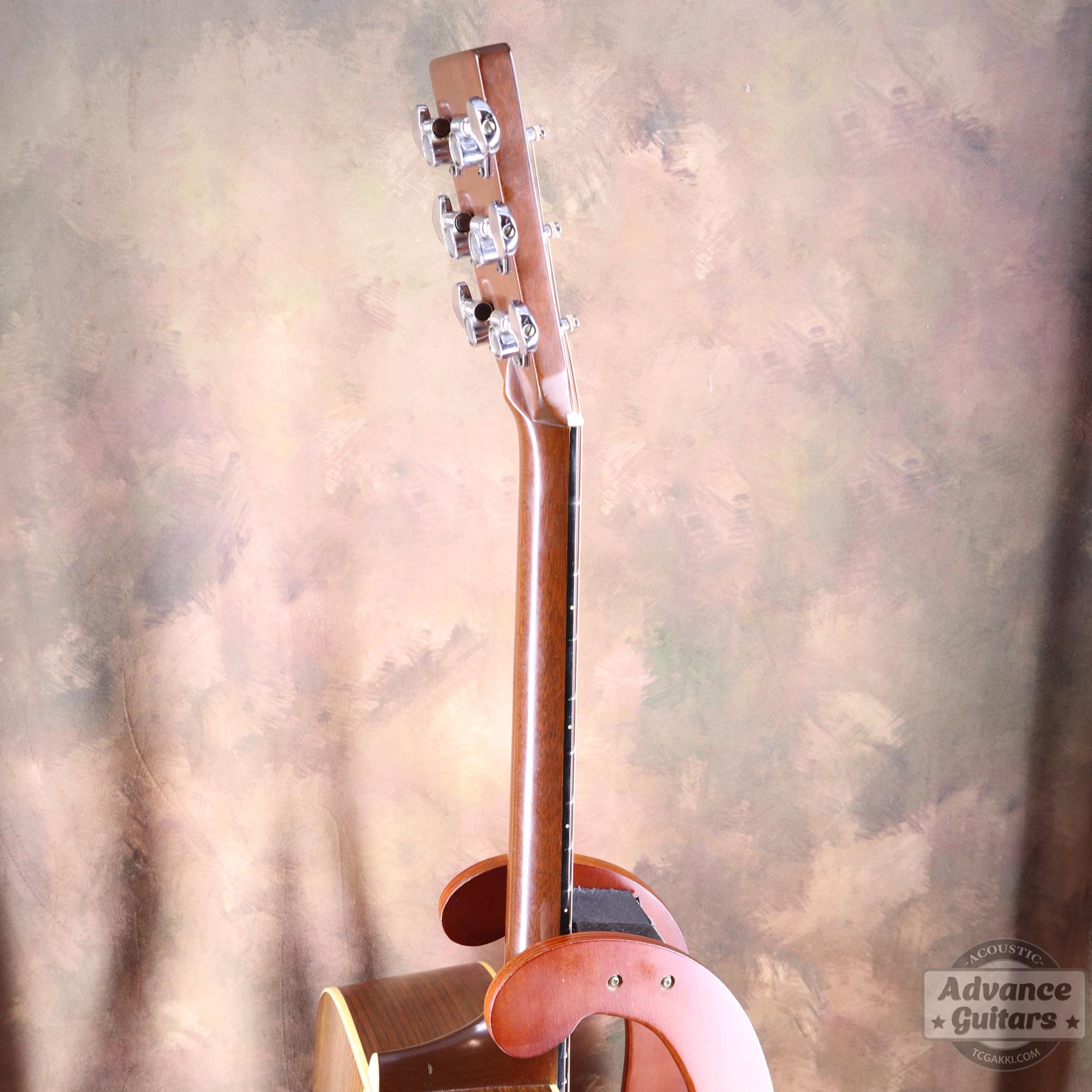
This 1975 D-28 has had its neck reset, and the frets, nut, and saddle have all been replaced.
If the angle between the neck and body has changed over time, causing the string action to rise, it is possible to adjust the string action by lowering the saddle.
However, the saddle has a proper height and a specific role to play.
Ensuring the correct angle at which the strings from the bridge rest on the saddle allows the saddle to properly transmit the strings’ vibrations.
If the saddle is lowered more than necessary, this angle becomes too shallow, which can prevent the instrument from producing its full, natural tone and may even cause unwanted noises.
Adjusting string action using only the saddle is not the best approach for the instrument.
A neck reset is a repair process that restores the angle between the neck and the body to its proper position, ensures the saddle is at its correct height, and then adjusts the string action accordingly.
On this D-28, the relationship between the neck angle, saddle height, and string action has been properly adjusted.
Just because it’s a 50-year-old Martin doesn’t mean you have to compromise on playability or its original tone.
When researching old instruments, you come across some very interesting stories.
Not all Stradivarius violins made over 300 years ago have survived to the present day in their original condition.
Many instruments are still played today, having undergone modifications to the neck, fingerboard, and internal components to adapt to changes in the times and playing styles.
Some even retain the headstock made by Stradivari himself, while their necks have been replaced in later generations.
Even so, the 300-year history of that instrument is not severed.
When I learned this, my personal perspective on “preserving an instrument” changed slightly.
Preserving the instrument’s original appearance as much as possible is, of course, a valuable goal.
On the other hand, instruments are not made merely to be admired; they are also made to produce sound and to be played by people.
Make the necessary repairs, and play it again.
And then pass it on to the next person.
As someone who performs repairs, I find this aspect particularly compelling.
Repair isn’t just about taking something away from an old instrument; it’s also about preserving that instrument in a playable condition for the future.
I believe that the history of the instrument comes to include the time it has been used and maintained through these repairs.
This neck reset on the D-28 is also part of that process.
A properly performed neck reset does not, in and of itself, have any drawbacks that would compromise the instrument’s originality.
Rather, it means that this 50-year-old Martin has regained its proper neck angle and saddle height, making it a pleasure to play once again.
Rather than preserving the sound created in 1975 exactly as it was at that time, the goal is to preserve it as an instrument that can continue to be played well into 2026.
I believe that the joy of owning a vintage guitar includes that very passage of time.
[Specifications/Included Case]
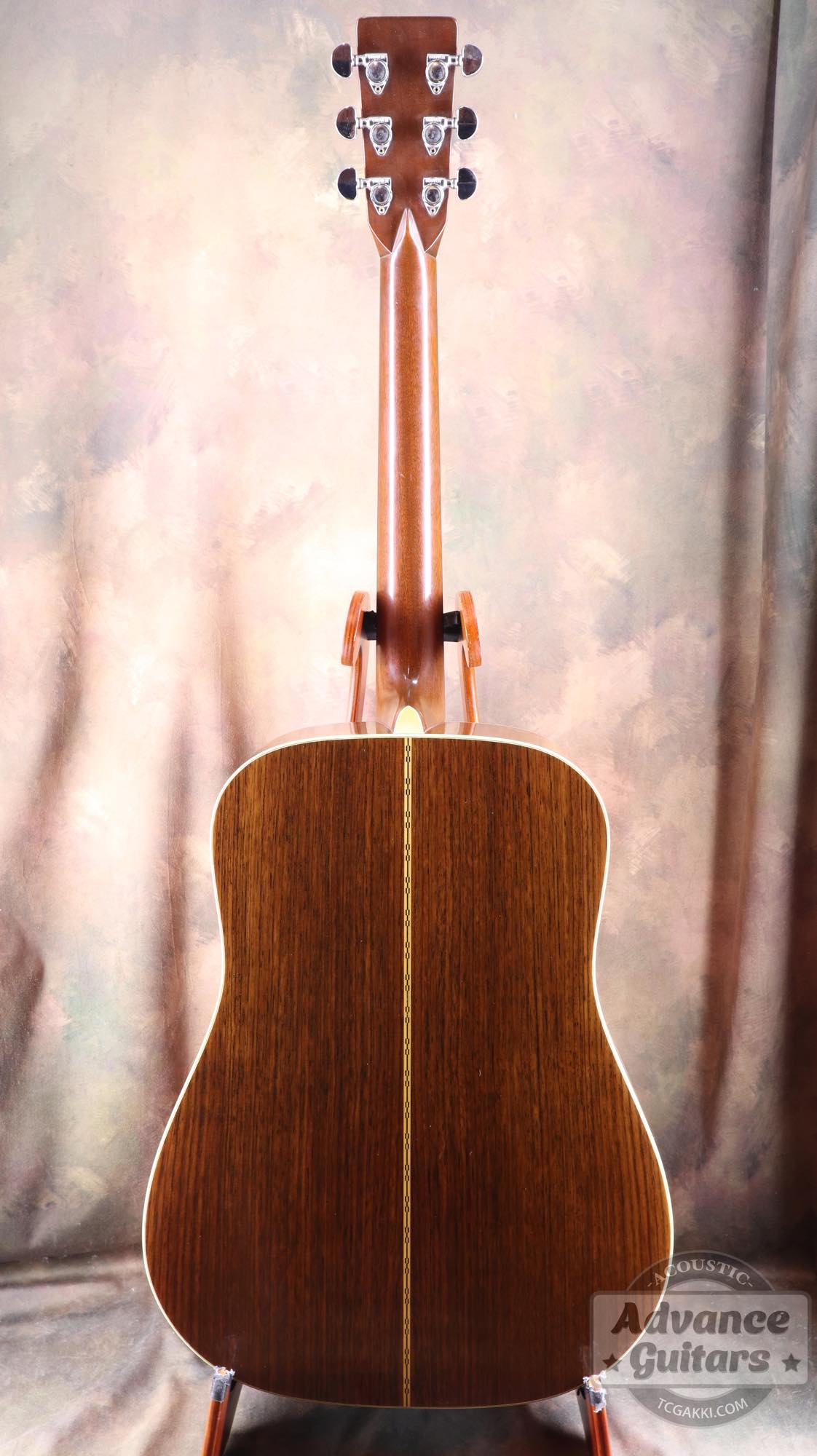
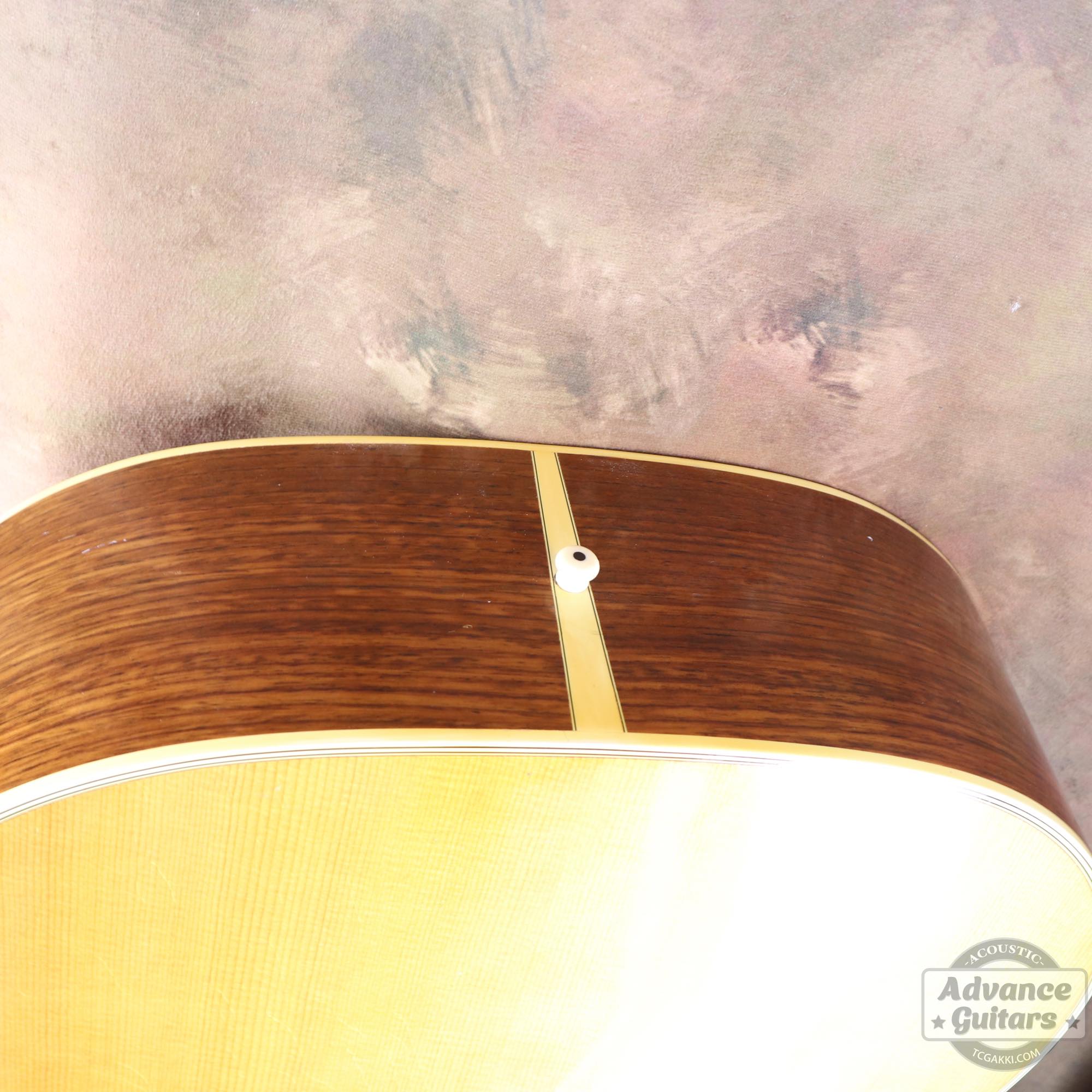
TOP: Sitka Spruce
BACK/SIDES: Indian Rosewood
FINGERBOARD/BRIDGE: Ebony
NECK: Mahogany
NUT WIDTH: 43mm
SCALE: 646mm
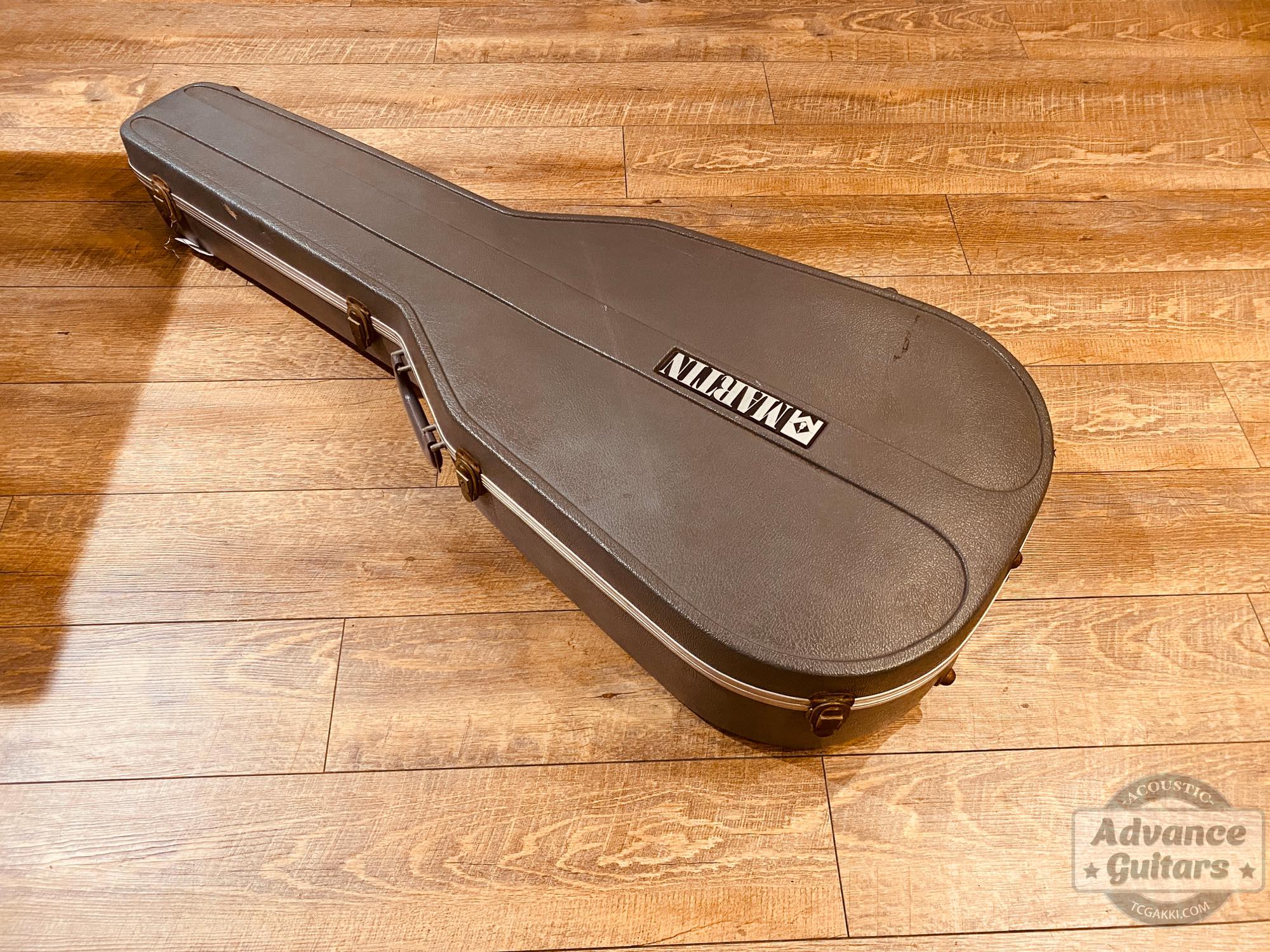
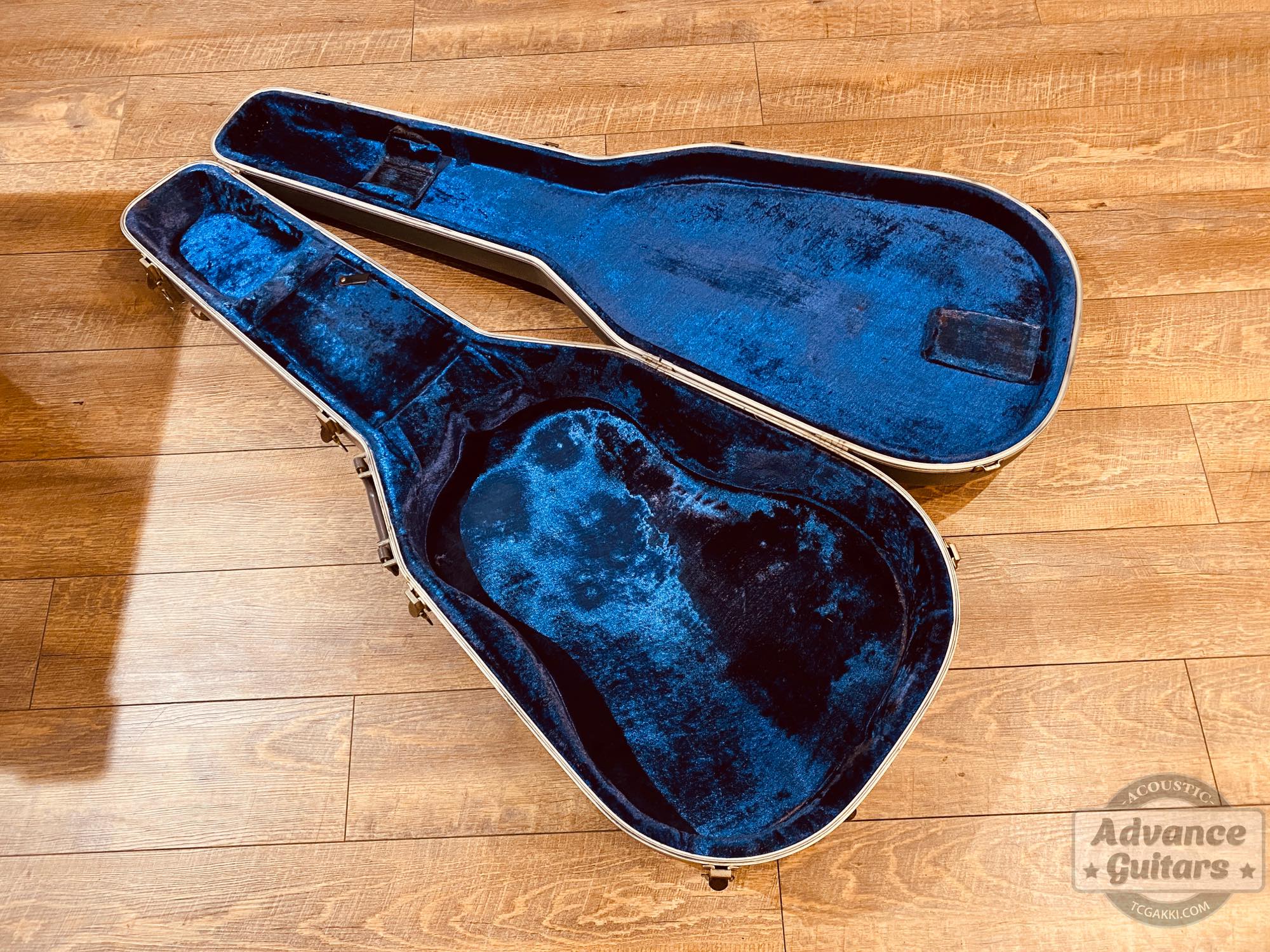
CASE: Original Hard Shell Case
[Repair/Modification History / Replaced Parts / Cosmetic Condition, etc.]
*As this is a used/vintage item, the information provided is based on our inspection.
Please be aware of this in advance.
- Crack repair (with reinforcement) on the lower left corner of the pickguard
- New nut and saddle installed
- New frets installed
- Neck reset
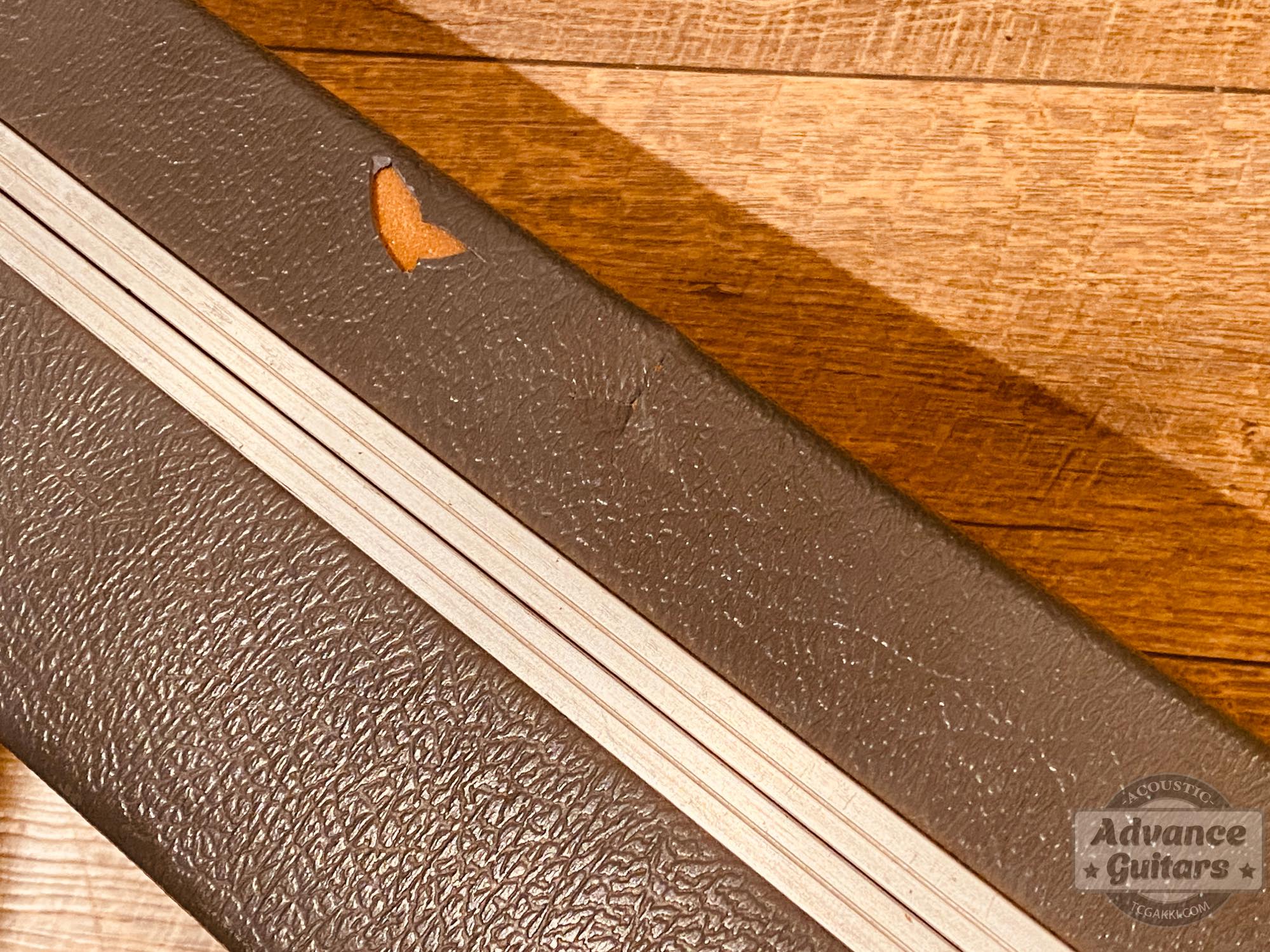
- The case has some cracks.
[Playing Condition]
- String action at the 12th fret: 2.4mm on the 6th string side, 1.9mm on the 1st string side
- Saddle height: approx. 2.0mm–2.5mm
- No muffled or buzzing sounds; plays well.
[Peace of Mind Warranty: 6 months]
[Mail-Order Assurance Service]
Since we cannot offer customers the opportunity to try out the instrument when purchasing via mail order, we provide a 6-day trial period after the product arrives.
Please take your time to try out the product at home, and if you are not satisfied, we will refund the purchase price.
*The customer is responsible for round-trip shipping costs.
Scheduled for shipment
Payment & Security
Your payment information is processed securely. We do not store your credit card details or access your credit card information.
Warranty Information for Used Products
For detailed warranty terms, please see here:
Electric Guitars/Electric Basses/Effectors/Amplifiers (Tuning Warranty: Up to 5 years)
If your instrument malfunctions or stops producing sound after purchase, we will repair it free of charge. The warranty period varies by product.
Acoustic Guitars (Peace of Mind Warranty: Up to 6 months)
For 1 month or 6 months after purchase, we will repair any defects resulting from normal use free of charge.
Wind Instruments (Up to 1 Year)
Upon arrival, we clean the interior of the instrument, replace consumables as needed, and perform any necessary repairs and maintenance. If the instrument malfunctions or stops producing sound due to normal use, we will repair it free of charge.
◯ There is no warranty on junk items.