
















Explanation
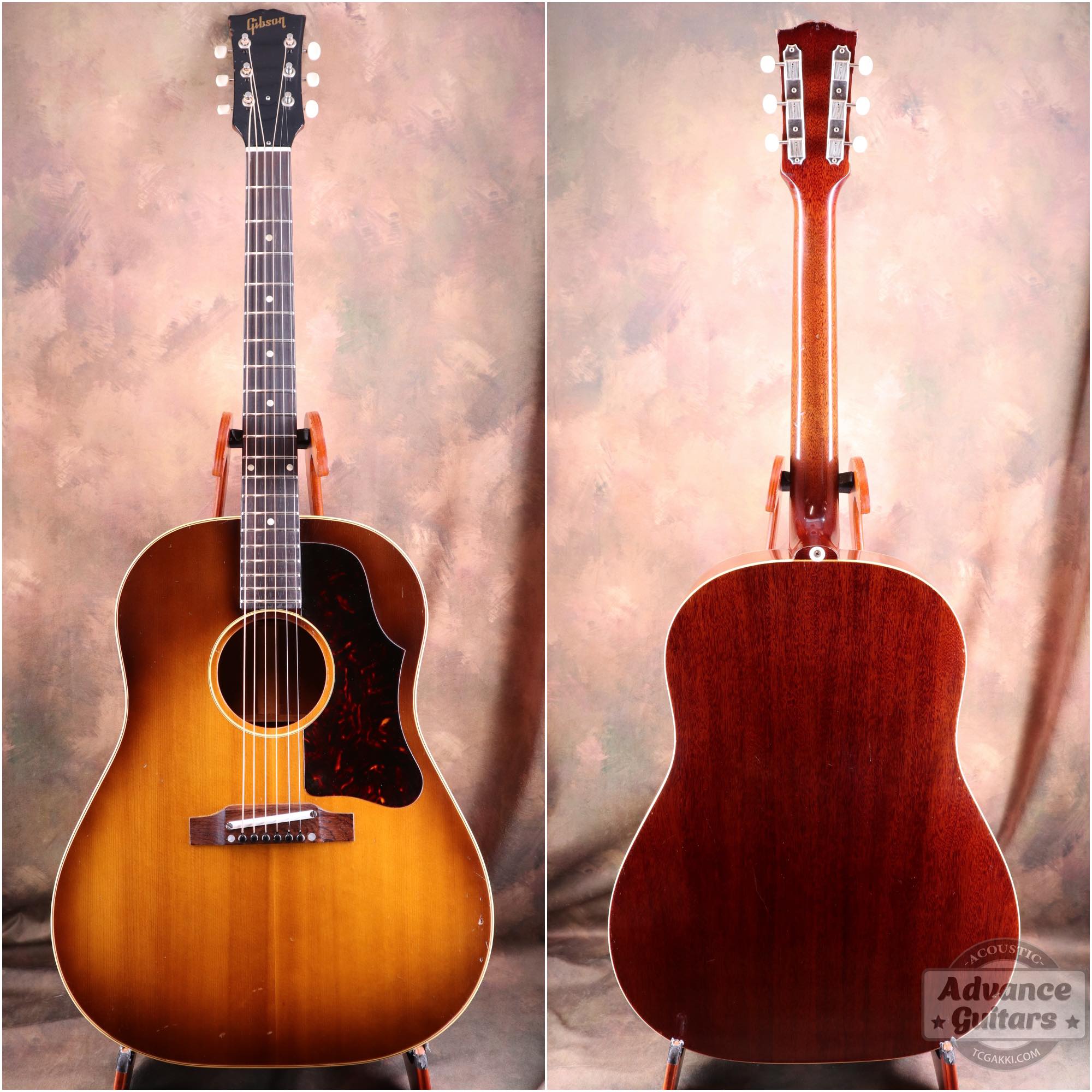
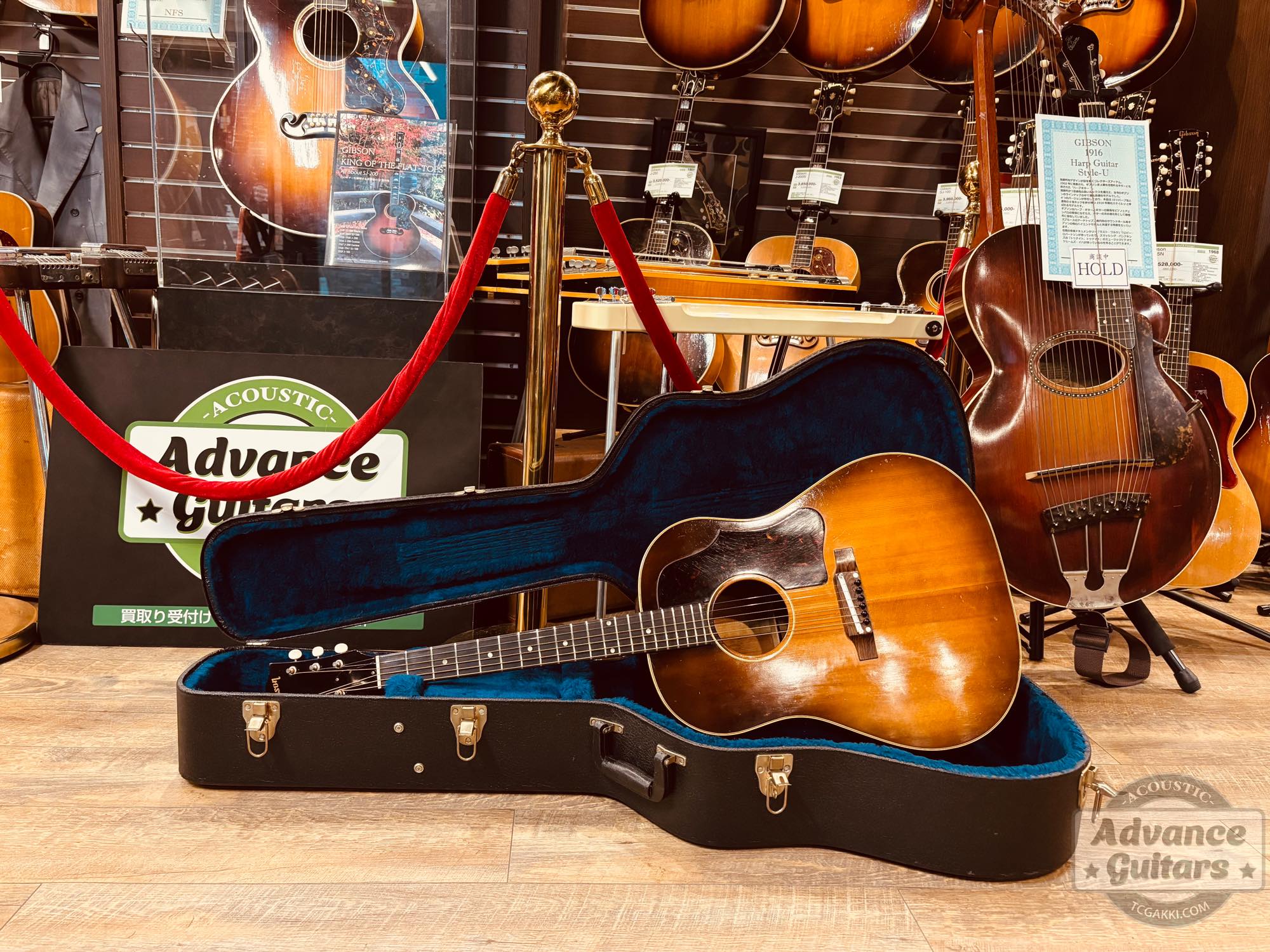
Gibson / 1958 J-45
This 1958 model is identified by its Factory Order Number (FON).
Inside the body, on the back side of the soundboard, the inscription “J-45 ADJ BRIDGE” can be seen on the crack prevention strip.
The adjustable bridge specification was introduced as an option in 1956.
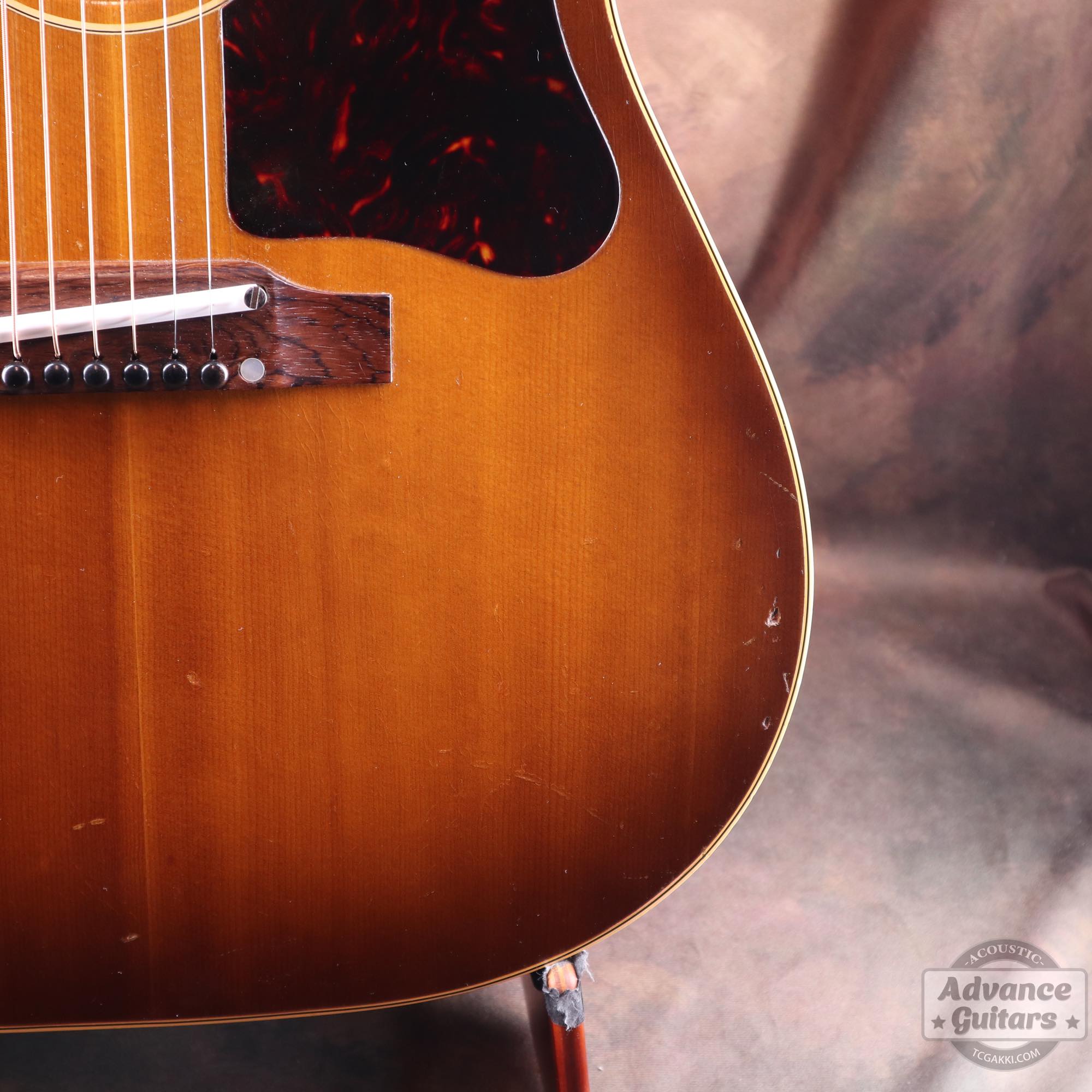
Initially, it featured a distinctive style with large string-action adjustment knobs on either side of the bridge (as seen on the J160E).
However, the design soon transitioned to an adjustable bridge with an aluminum base.
Furthermore, in the late 1950s, the look changed dramatically, shifting to a combination of pure white ceramic saddles and large screws.
1958 was the first year that shipments of the adjustable bridge model exceeded those of the straight saddle model, marking a period when the standard for the J-45 was evolving. The mechanism, which allowed for easy string height adjustment without having to file down the
saddles, must have been innovative even at the time.
From the invention of the adjustable truss rod onward, Gibson has periodically created such historic legacies.
It is deeply moving to consider that this innovation not only allowed for easier adjustment but also had a significant impact on the sound—a sound that is integral to the music of artists like Donovan and Takuro Yoshida.
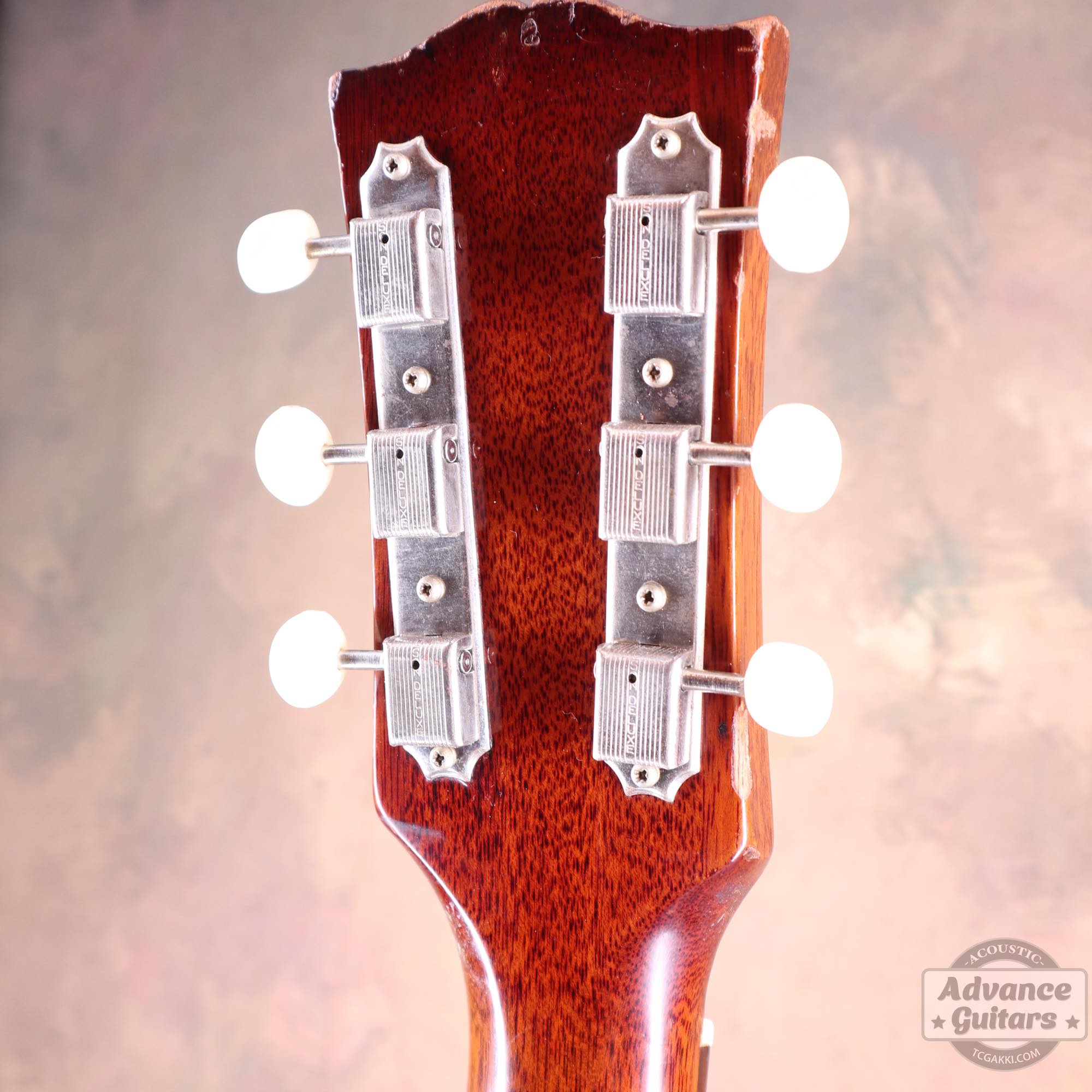
Since this particular instrument uses replacement parts, it conforms to the specifications of the 1960s.

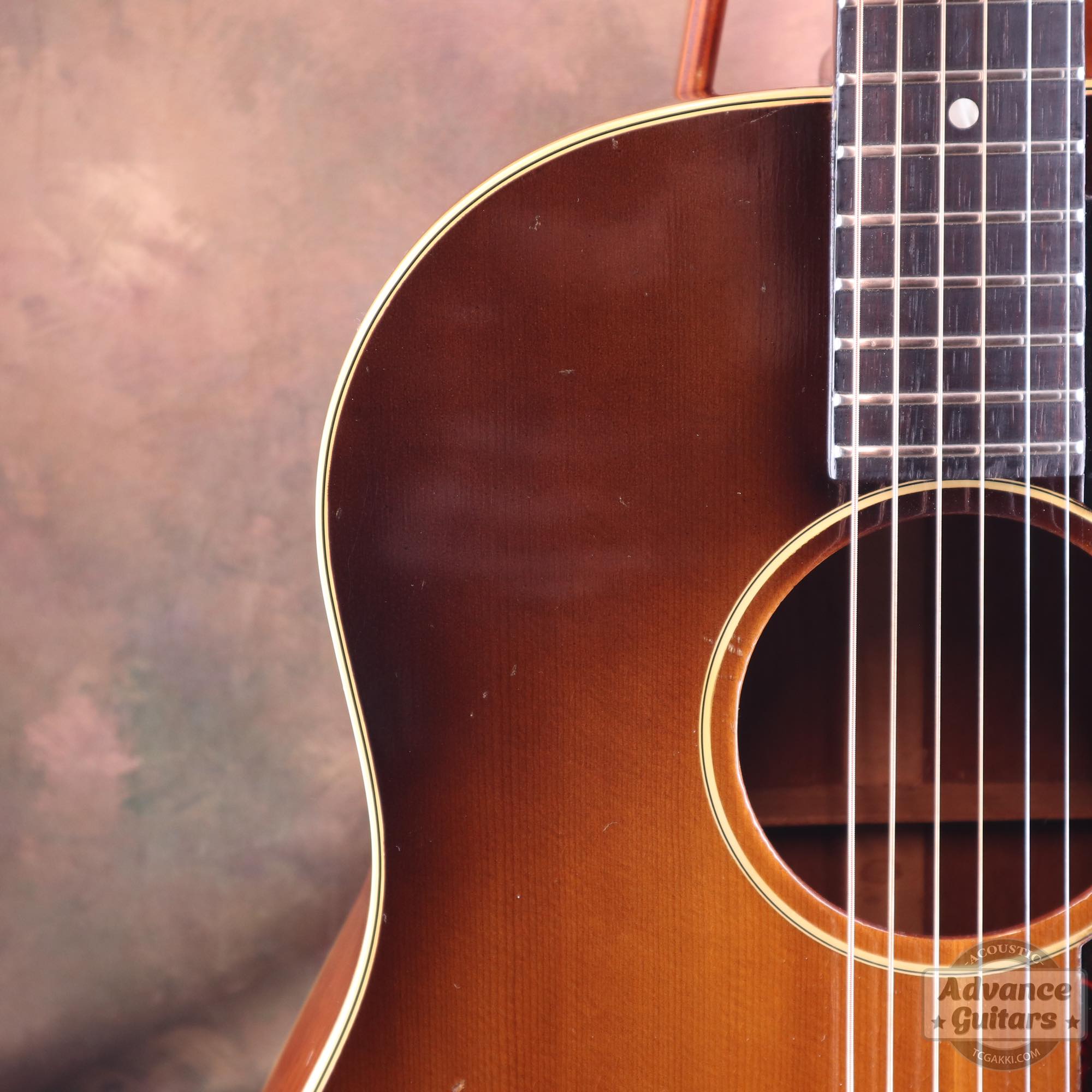
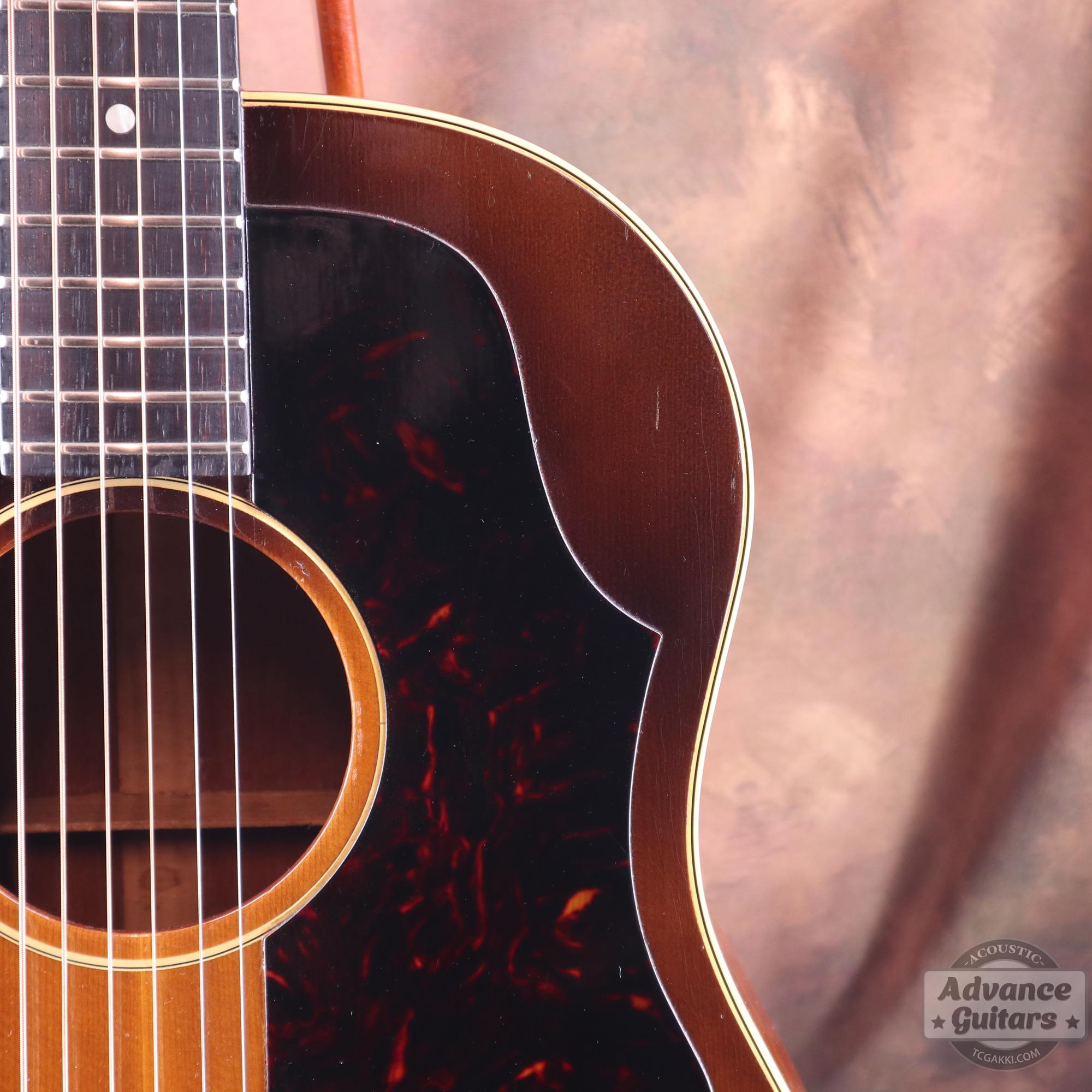
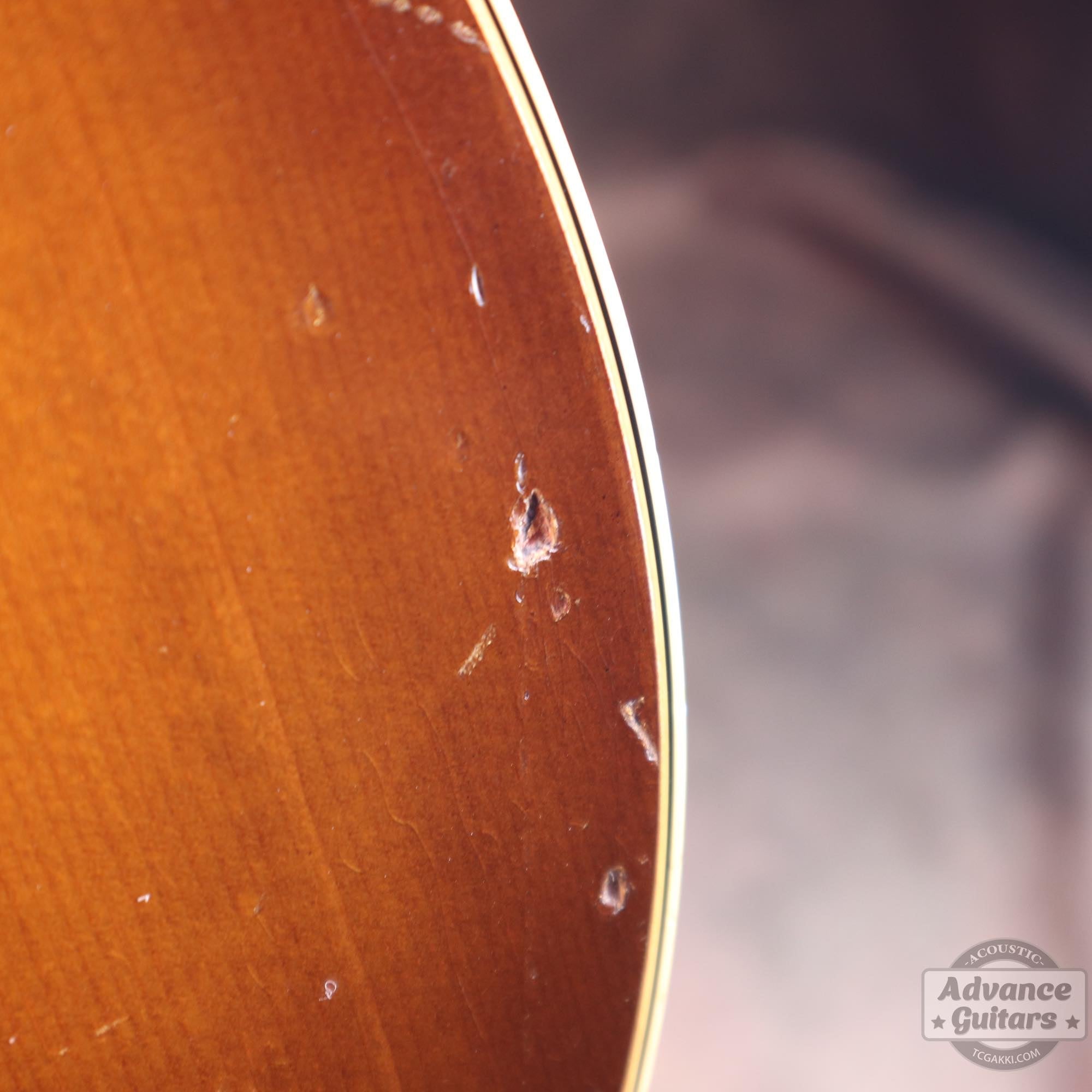
Another distinctive feature of this particular guitar is its finish. The sunburst on the top of the body has faded and aged over time, resulting in a finish that closely resembles a honey sunburst. This is a characteristic finish often seen around 1960.

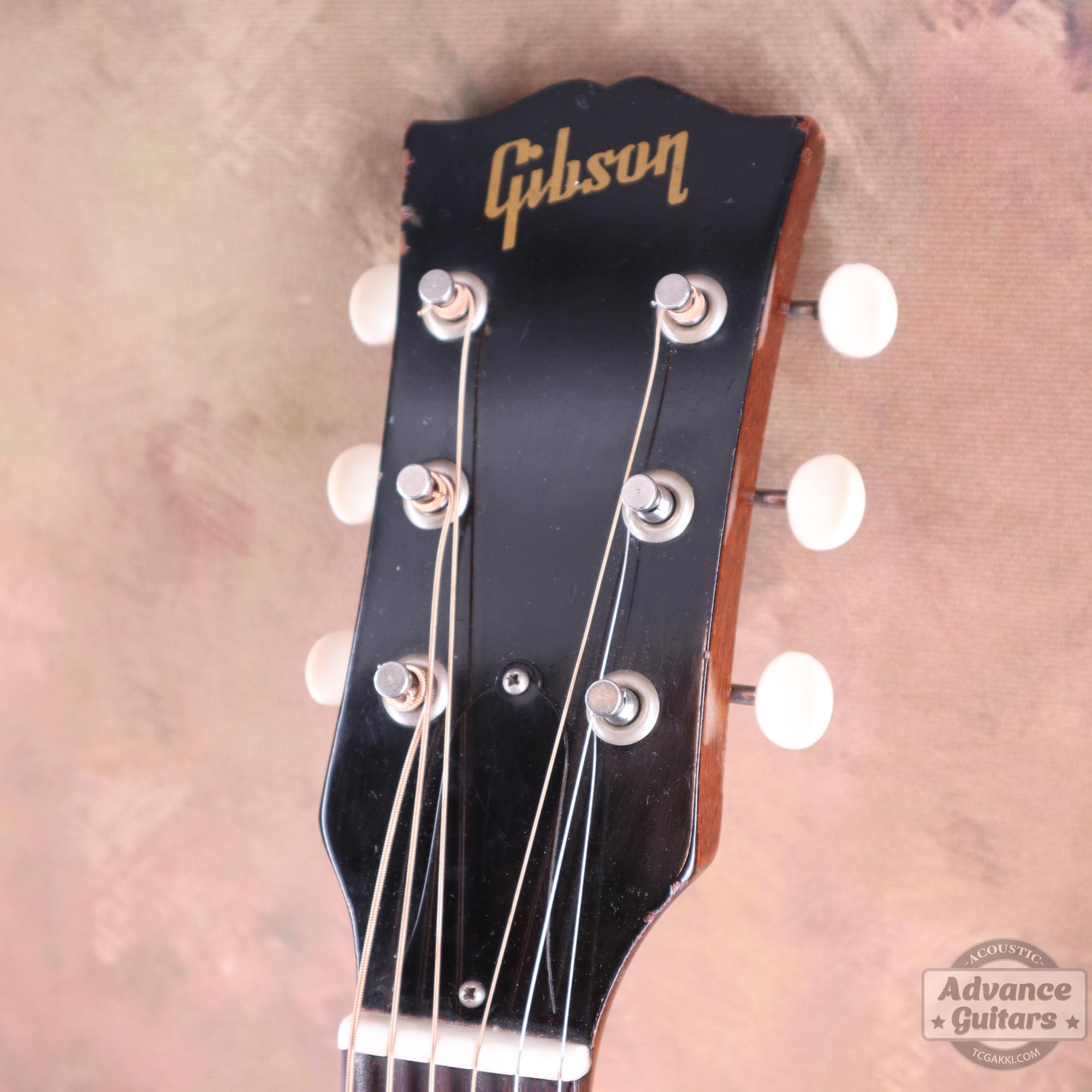
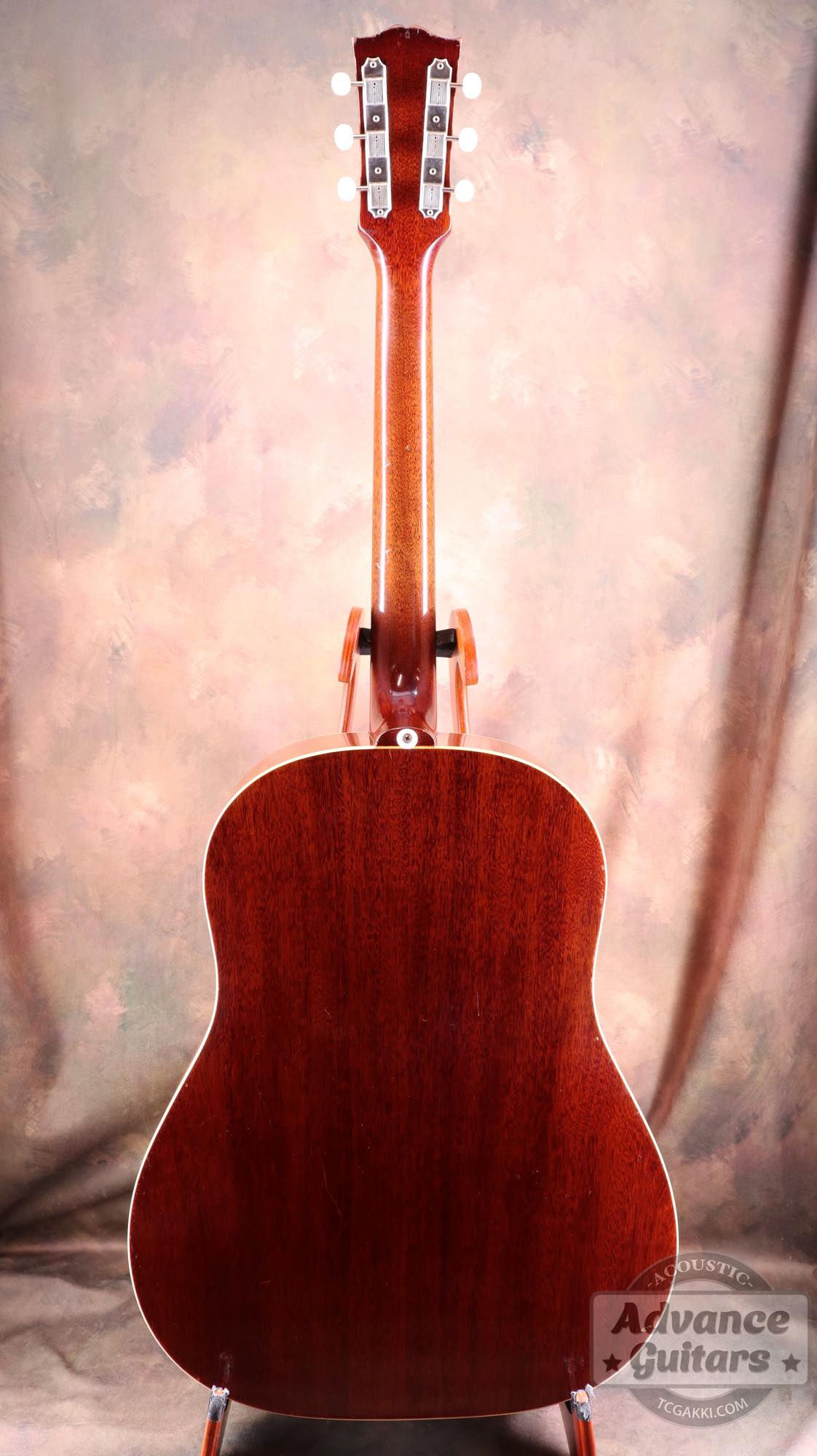
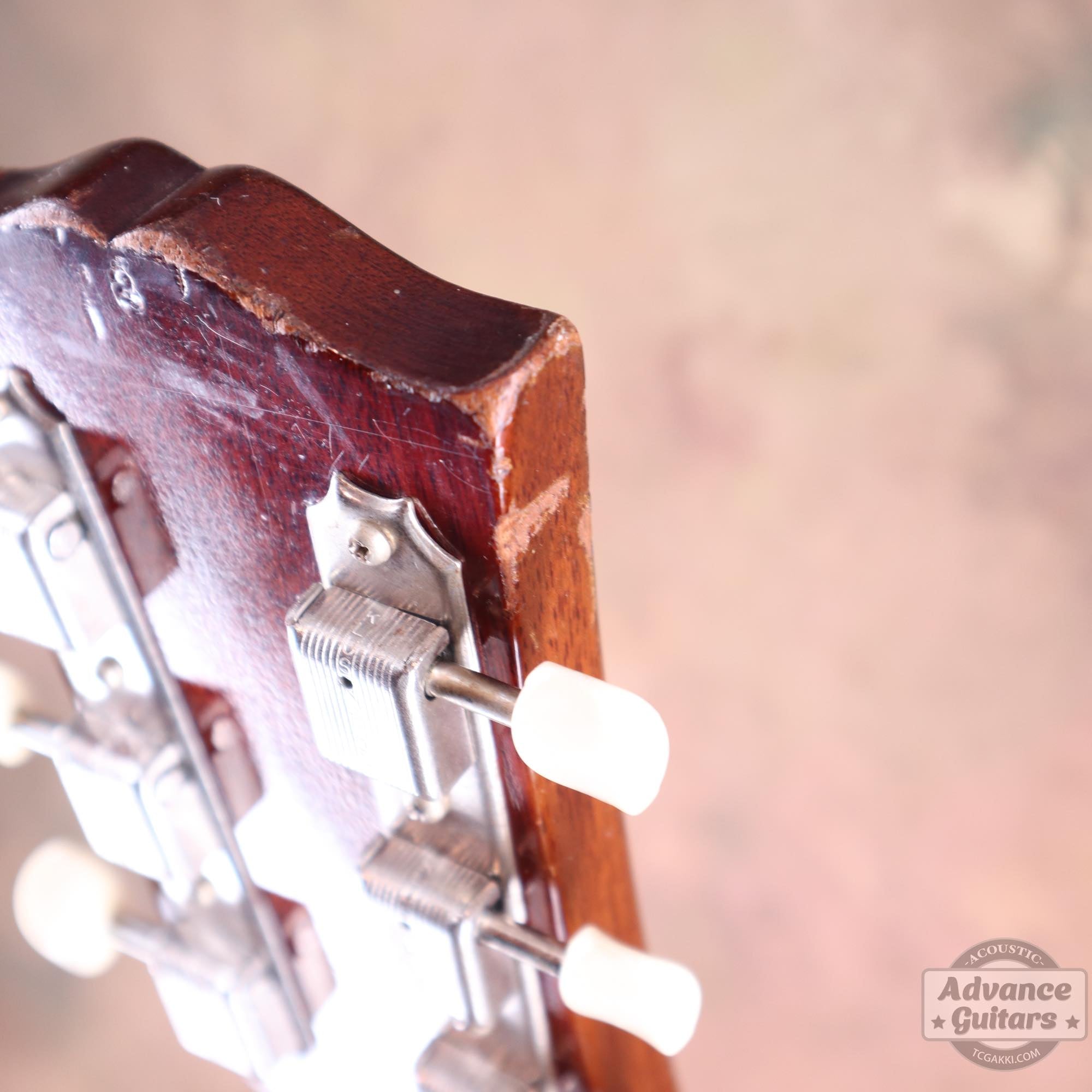
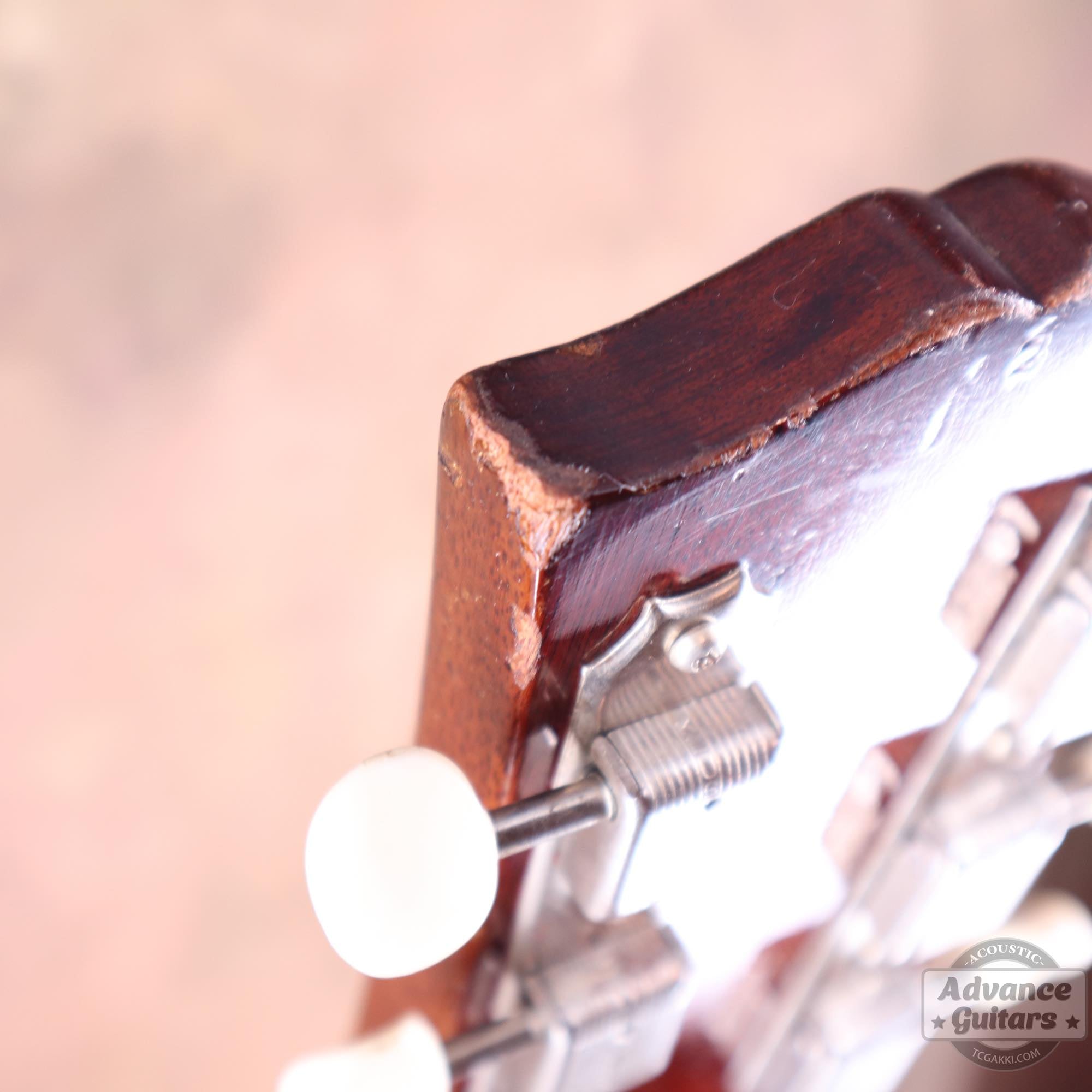
While this would seem to contradict the “FON” designation, the key here is the “2” stamped on the back of the headstock. This indicates that it is a “second” grade instrument, a designation applied when there are cosmetic defects or other issues.

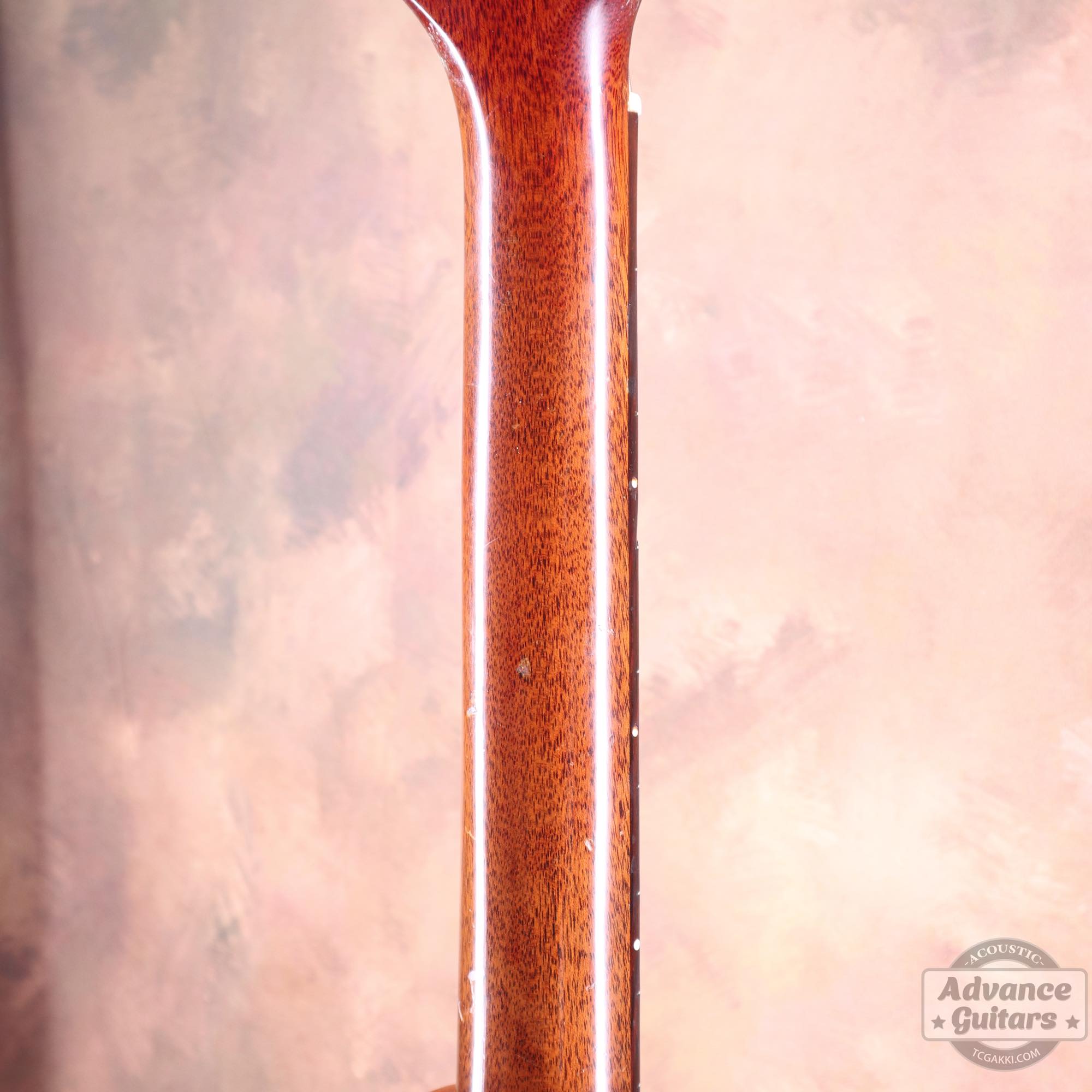
Another point worth noting here is the neck profile.
While necks from around 1958 typically have a thicker profile, this particular instrument features a relatively thin neck profile.
For reference, see the following:
Another 1958 model
: Neck thickness near the 1st–2nd frets: 23.3 mm
; Neck thickness near the 4th–5th frets: 24.5 mm
Another 1960 model
: Neck thickness near the 1st–2nd frets: 20.0 mm
; Neck thickness near the 4th–5th frets: 21.0 mm
Neck thickness near the 1st–2nd frets on this
particular guitar: 20.6 mm
; neck thickness near the 4th–5th frets: 20.9 mm
Based on this information, it’s likely that this guitar was originally manufactured in 1958, but due to some issue, both the neck and finish were reworked around 1960.
However, there are still traces of red on the body back—a characteristic of the cherry sunburst finish introduced in 1961—which makes this quite puzzling. Given the
many possibilities, this is a truly fascinating instrument.

There are no issues whatsoever with using it as a vintage guitar.
In fact, I believe the ability to enjoy it along with its story is a definite advantage.
[Specs/Included Case]
TOP: Spruce
BACK/SIDES: Mahogany
FINGERBOARD/BRIDGE: Rosewood
NECK: Mahogany
NUT WIDTH: 42.8mm
SCALE: 628mm
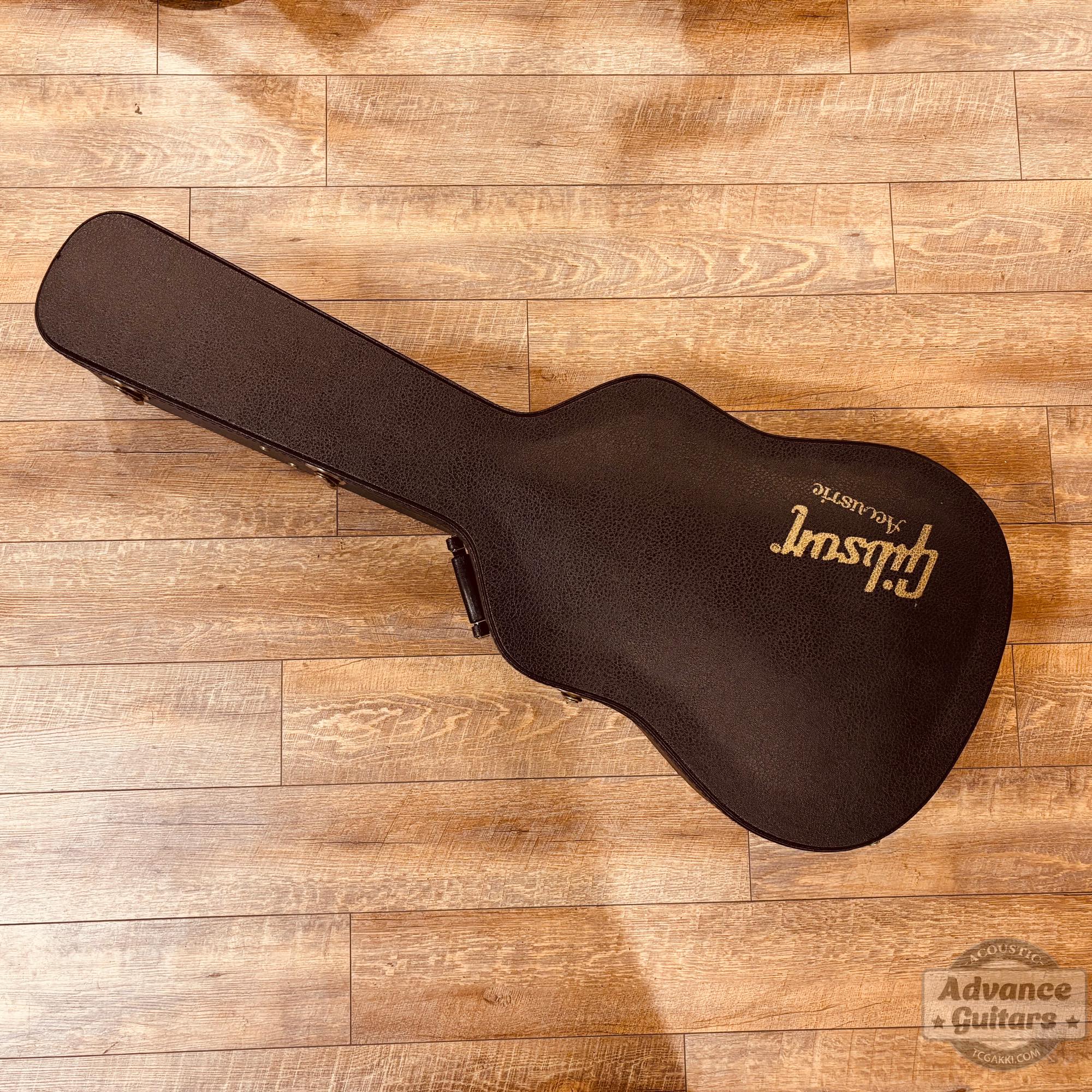
CASE: Non-Original Hard Shell Case (Gibson)
[Condition]
- String action at the 12th fret: 2.2 mm on the 6th string side, 1.7 mm on the 1st string side - The adjustable
saddle allows you to set the string action to your preference.
- Crack repairs on the upper-left and lower-left corners of the pickguard (glued and reinforced)
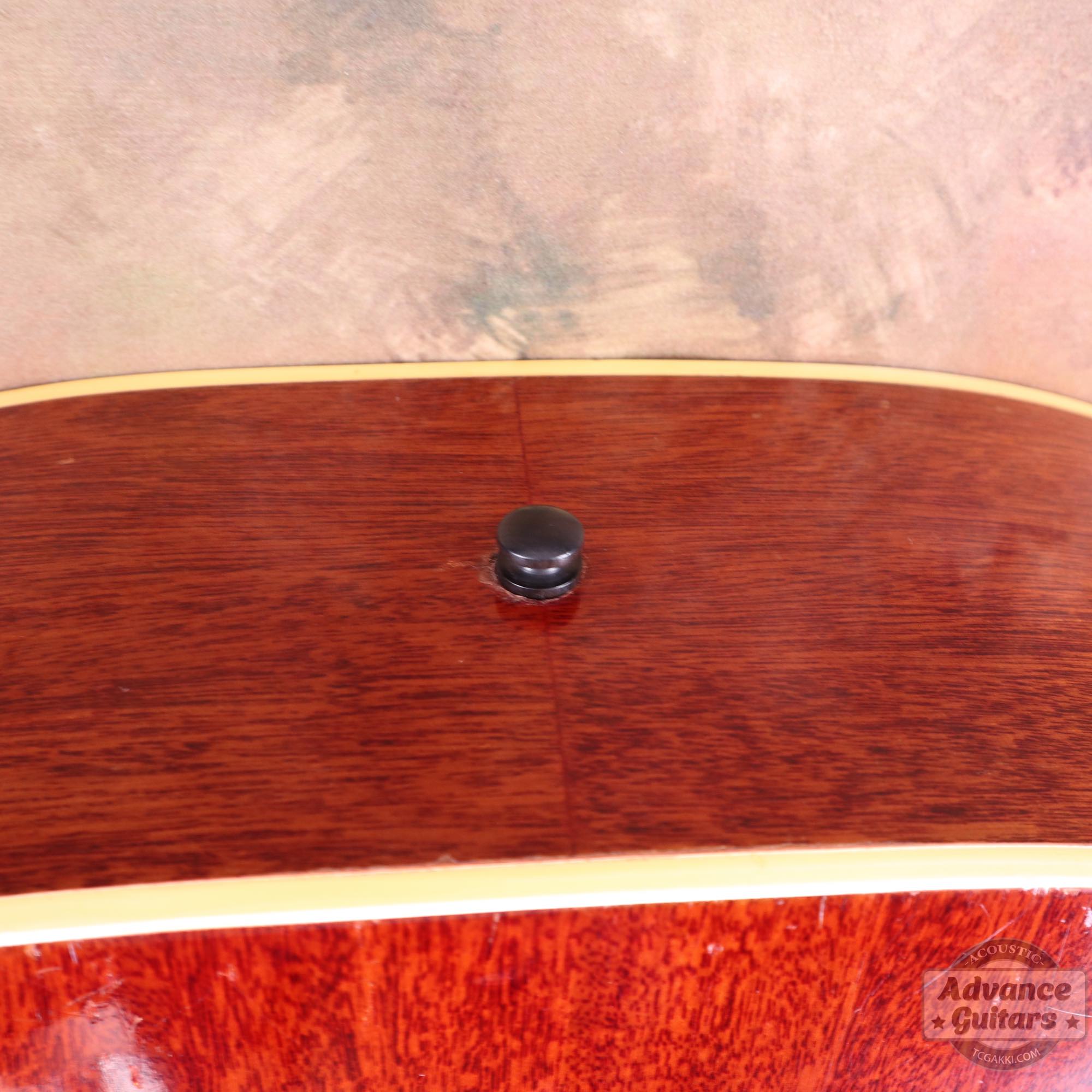
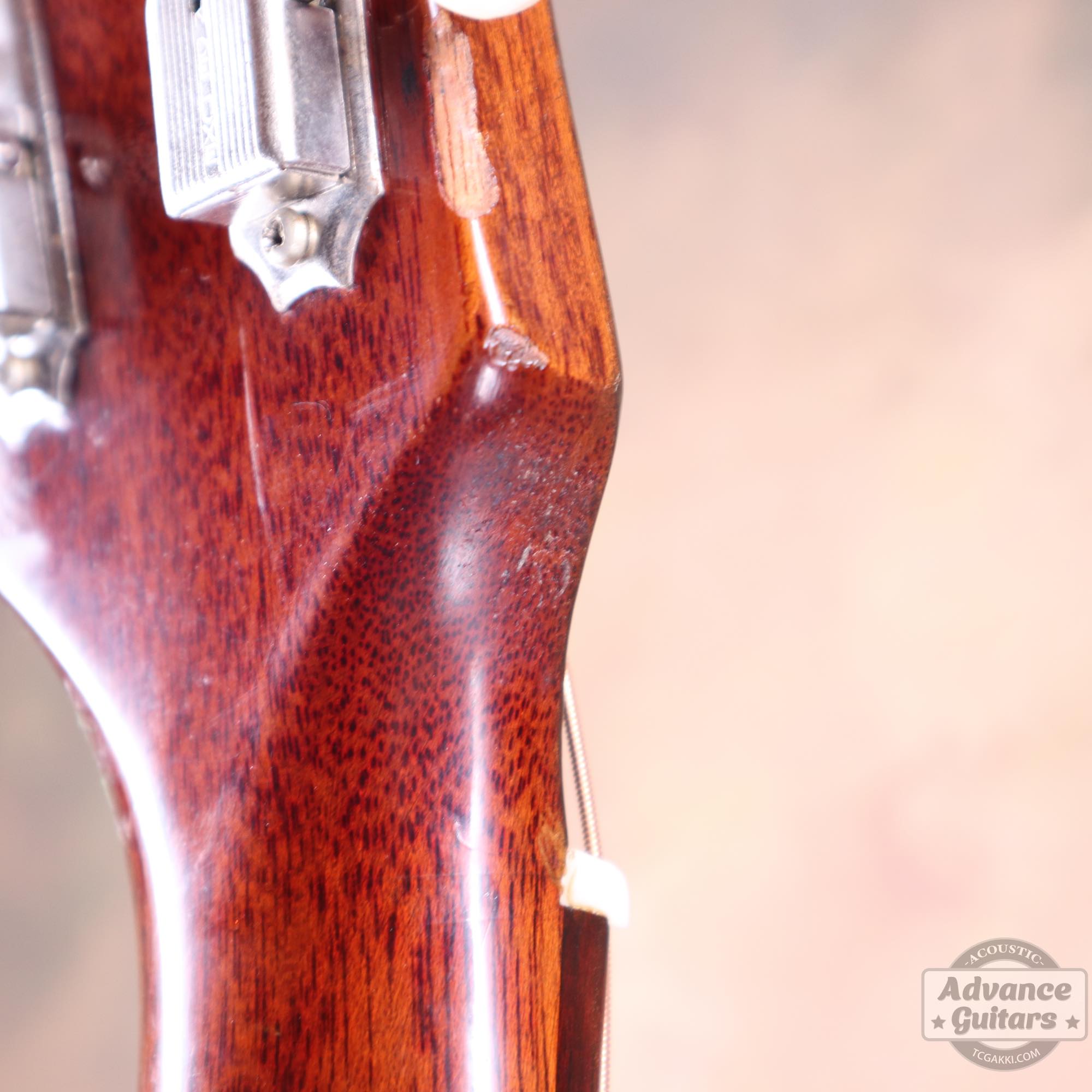
- The saddle, bridge pins, end pin, and bridge plate have been replaced - A strap pin is attached to the
neck heel
- The end pin area has been modified for expansion
[Peace of Mind Warranty: 6 months]
[Mail-Order Assurance Service]
Since we are unable to offer customers the opportunity to try out the instrument when purchasing through mail order, we provide a 6-day trial period after the product arrives. Please take your time to try out the product
at home, and if you are not satisfied,
we will refund the purchase price. *The customer is responsible for round-trip shipping costs.
Payment & Security
Your payment information is processed securely. We do not store your credit card details or access your credit card information.
Warranty for Used Products
Please click here for detailed warranty terms.
Electric Guitars / Electric Basses / Effectors / Amplifiers (Adjustment Warranty: Up to 5 years)
If your instrument malfunctions or stops producing sound after purchase, we will provide service free of charge. The warranty period varies by product.
Acoustic Guitars (Peace of Mind Warranty: Up to 6 months)
For defects arising from normal use, we will provide free service for either 1 month or 6 months after purchase.
Wind Instruments (Up to 1 Year)
Upon arrival, we clean the interior of the instrument, replace consumables as needed, and perform any necessary repairs and maintenance. If the instrument malfunctions or stops producing sound during normal use, we will repair it free of charge.
◯ There is no warranty on junk items.