


Explanation
A massive analysis of Gibson J-45s from the 1940s to the 1960s. This is truly a comprehensive guide to the J-45!

=============================================================
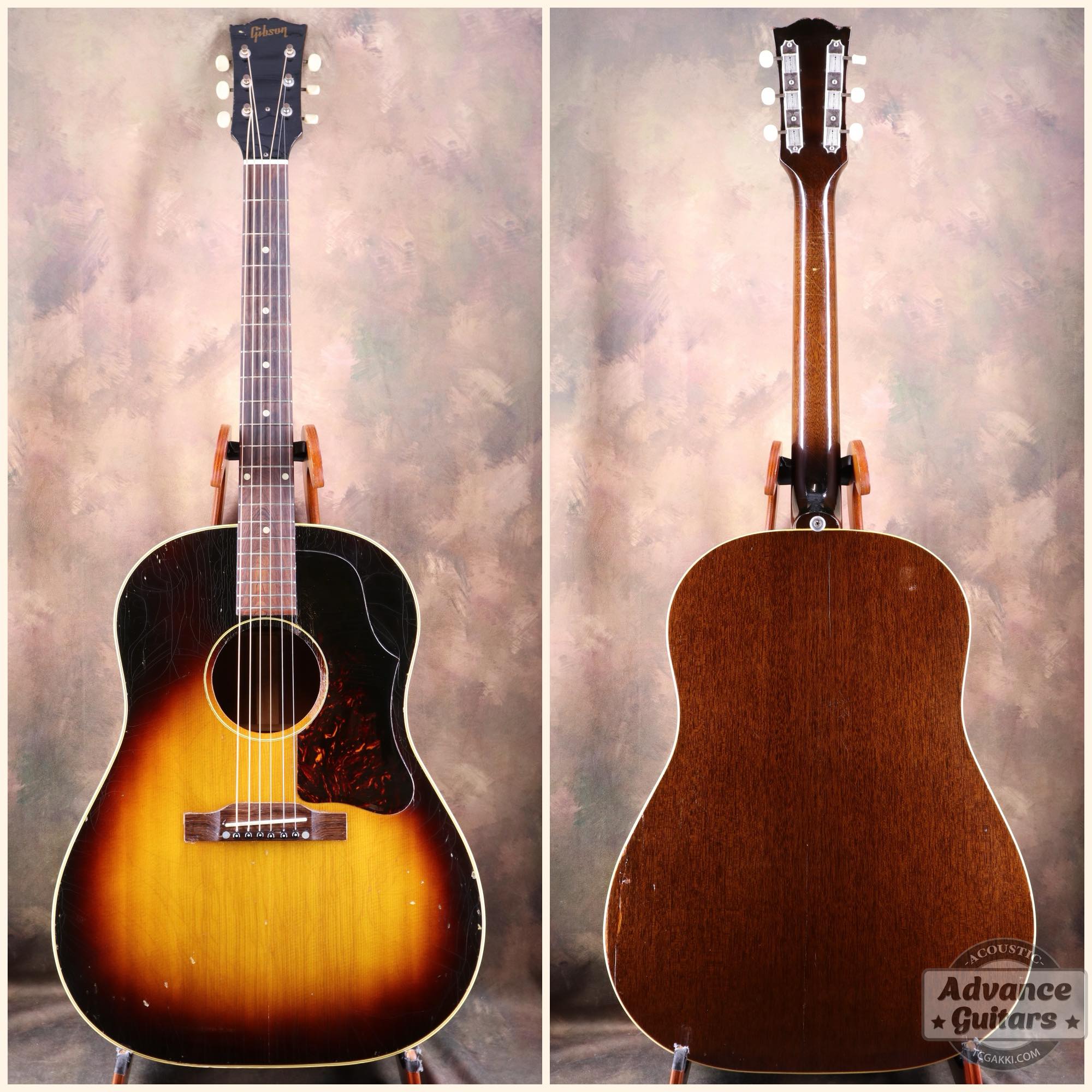
Gibson / 1956 J-45
"A rare model with changes in parts that aren't visible."

1956 was a time when not only the pickguard but also the internal bracing structure was changed.
J-45s made before 1956 had scalloped bracing.RecruitWhile it was previously characterized by a bright and expansive sound, the specification has been changed to non-scalloped bracing, resulting in the tight and powerful sound that is unique to the J-45.
—A tone that is characteristic of the J-45...
The body top is made of spruce and finished with a sunburst color scheme, which involves painting in a gradient of black, red, and yellow.
A distinctive feature is the generous amount of black paint used to decorate the edges.

The sides and back are made of mahogany with a tight grain.
The natural-colored finish allows you to appreciate the beautiful, evenly distributed grain of the mahogany wood.

The fretboard is made of rosewood with a beautiful, flowing grain.
The contrast between light and dark shades captivates the player.

The neck is made of mahogany, and its moderate thickness and shape make it feel comfortable in the hand without being too bulky.

The rosewood upper belly bridge uses a short saddle, allowing a bright yet resonant sound to resonate throughout the entire body.

The pickguard specifications changed from small pickguards to large pickguards starting in 1955.

The headstock features a Gibson silkscreen logo, and the head angle is set to 17 degrees.

The guitar is equipped with KLUSON 3-in-line tuners with white buttons.
There are traces on the back of the neck where the screw holes from before the replacement were filled in.
The presence of marks larger than the peg bushings suggests that it was likely equipped with Grover chromatic tuning pegs.


This rare instrument, featuring non-scalloped bracing, possesses the distinctive sound characteristic of the J-45 that would continue to be produced in the future.
Aside from the area around the soundhole, there are no major crack repairs, and it remains in very clean condition.
Transitional models are rare and popular.

[Specifications/Included Case]
TOP: Spruce
BACK/SIDES: Mahogany
FINGERBOARD/BRIDGE: Rosewood
NECK: Mahogany
Nut width: 42mm
SCALE: 623mm
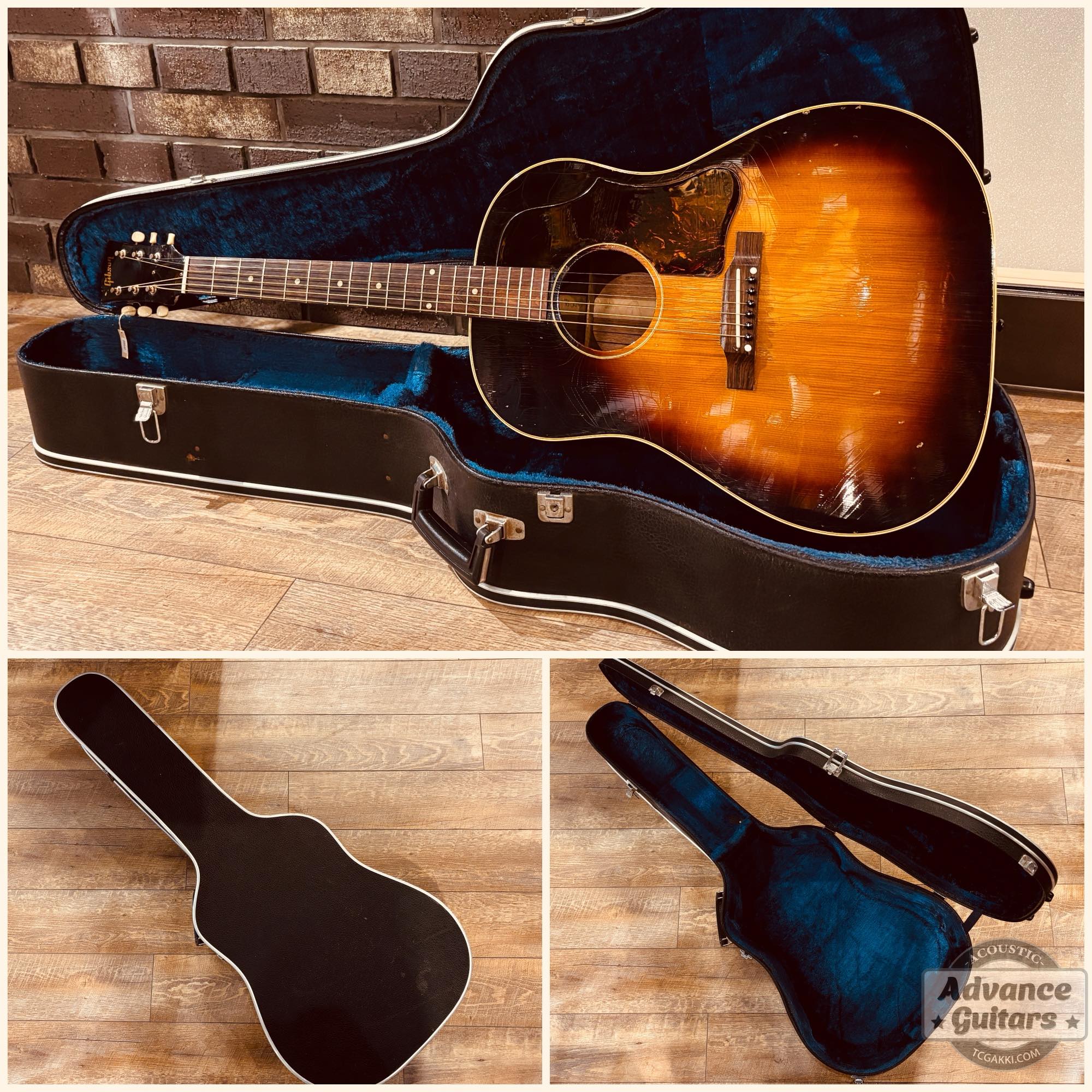
CASE : Non Original Hard Shell Case
[condition]
- The cracks throughout the instrument give it a sense of understated elegance and gravitas.
- There is no buzzing or jamming in the sound, and the playing condition is good.
-String height at the 12th fret: 3.0mm on the 6th string side, 2.5mm on the 1st string side
- Saddle protrusion amount: Approximately 2.0mm to 2.5mm
- There is one repaired crack on the upper right of the soundhole and on the lower left of the body back.
- The holes have been repaired by replacing the pegs.
-A strap pin has been added to the neck heel.
[Peace of Mind Guarantee: 6 months]
[Peace of Mind Service for Online Shopping]
Since we cannot offer customers the opportunity to try out products in person when purchasing through mail order, we provide a 6-day trial period after the product arrives.
Please try out the product at home, and if you are not satisfied, we will refund your purchase price.
*The customer is responsible for round-trip shipping costs.
Payment & Security
Your payment information is processed securely. We do not store your credit card details or access your credit card information.
Warranty information for used products
For detailed warranty conditions, see below.HerePlease take a look.
Electric guitar / electricBass/Effector/ Amplifier (Adjustment warranty: up to 5 years)
If your product malfunctions or stops producing sound after purchase, we will provide free repairs. Warranty periods vary depending on the product.
Acoustic guitar (with extended warranty: up to 6 months)
We will provide free support for any defects that occur during normal use for one or six months after purchase.
Wind instruments (maximum 1 year)
Upon arrival, we perform internal cleaning, replace consumables as needed, and carry out necessary repairs and maintenance. If the instrument malfunctions or stops producing sound during normal use, we will provide free service.
◯There is no warranty on junk items.