
The effects of body shape, wood, and scale on tone, and how to choose
Explained! The types of acoustic guitars
For those who feel something lacking in the sound of their current guitar, or those who want to choose “the one” that truly suits them as they begin in earnest from here. Acoustic guitars undergo dramatic changes in sound depending on the combination of shape and wood. In this article, we will thoroughly explain the differences between each type and how to choose the best one.
Table of Contents
1. First, let’s learn! Acoustic guitar “3 major categories”
1-1. Steel-string guitar (folk guitar)
1-2. Classical guitar (nylon-string guitar)
1-3. Electric Acoustic (electric acoustic guitar)
3. [By body shape] Sound characteristics and playing styles that suit them
3-1. Dreadnought: rich low end and power
3-2. Folk / OM / OOO: great response and balance
3-3. Parlor / New Yorker: compact and delicate tone
3-4. Jumbo: overwhelming volume and presence
4. [By wood (tonewood)] Differences in overtones and character
4-1. Top wood: spruce and cedar
4-2. Side & back wood: mahogany and rosewood
4-3. The decisive difference in sound between solid wood and laminated wood
5. [Playability] The secret behind neck scale (string length) and nut width
5-1. Scale length and tension feel
5-2. How nut width affects fingering
6. How to choose the acoustic guitar that’s best for you
6-1. Strumming / strong rhythm playing
6-2. Solo guitar / fingerstyle
Summary
1. First, let’s learn! Acoustic guitar “3 major categories”
<\/div> <\/div> <\/div> <\/div> <\/div>
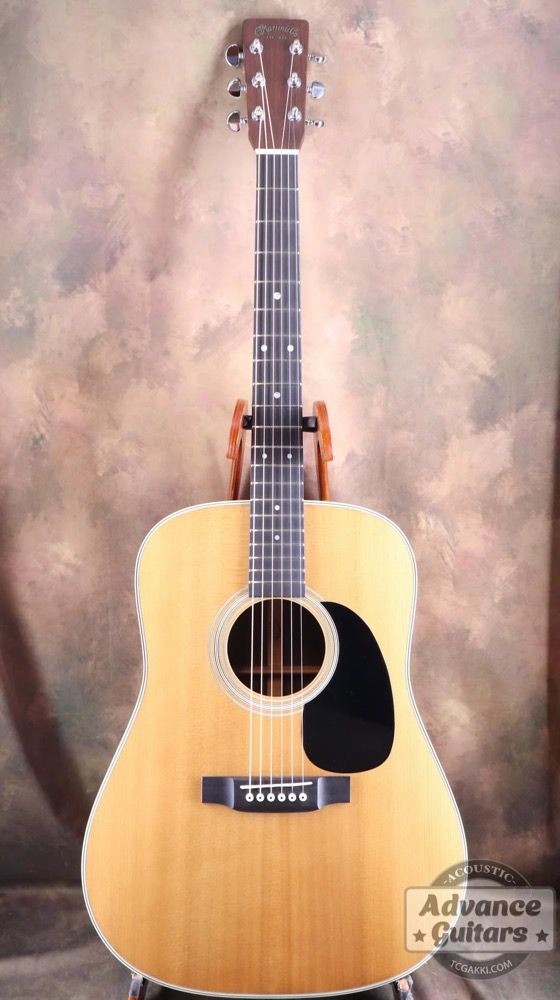
Before stepping into the deep world of acoustic guitars, let’s first organize the three major categories that serve as the basic premise. Even among guitars that look similar at first glance, the material of the strings, or the presence or absence of electronic mechanisms for amplifying the sound, makes the feel of the strings and the suitable genre completely different.
1-1. Steel-string guitar (folk guitar)
What is now most commonly referred to as an “acoustic guitar” is this type with steel strings. From strumming play with a pick to delicate finger-picked arpeggios, it performs in all kinds of popular music such as pop, rock, country, and blues.
Its distinctive sparkling tone and sustained, long high range, along with a powerful low end, are characteristic of steel strings. The neck is made relatively thin, making it suitable for play styles that emphasize chord strumming.
1-2. Classic Guitar (Nylon-String Guitar)
The classic guitar, also called a gut guitar, is strung with nylon strings (in the past, gut strings made from sheep intestines were used). Compared with steel-string guitars, the tension is weaker, and the strings are easier to pluck with the fingers, producing a warm, soft tone that is its greatest characteristic.
It is mainly used in classical music, bossa nova, flamenco, and similar styles. Its neck width (nut width) is around 50 mm, wider than a steel-string guitar (around 43 mm), and because the fingerboard is flat, it is designed to make complex single-note playing and the characteristic fingerstyle techniques of classical guitar easier.
1-3. Electric Acoustic (Electric Acoustic Guitar)
These are models that have microphones and sensors, called "pickups," built into the body of steel-string guitars and classic guitars, or mounted under the bridge, so they can produce loud sound by connecting directly to a guitar amp or PA system.
The natural sound (the sound without going through an amp) resonates the same as a normal acoustic guitar, but it is essential when you want to output the guitar's sound without being buried in the mix during live performances or in band ensembles. Recently, models equipped with high-performance preamps that do not compromise the resonance of the natural sound have become mainstream.
Staff Comment
Just by saying “acoustic guitar,” the choices widen dramatically depending on the genre of performance or the sound you want to create!
They’re all packed with elements that make it hard to choose, which is what makes it fun!
If you’re vaguely thinking, “I want to try an acoustic,” we first recommend picking up a folk guitar!
2. Changing the performance character! The impact of the acoustic guitar’s “shape” and “wood” on the sound
Now that we’ve understood the classification of body sizes, let’s dig deeper into the “steel-string guitar,” which offers the most options and the greatest depth.
An acoustic guitar, put simply, is a “resonance box made of wood.” The vibration of the strings is transmitted through the bridge to the body’s top board (the top wood), where it resonates inside the box and is projected out from the sound hole. Therefore, the box’s “size and shape (body shape)” determine the volume and richness of the low end, while the “type of wood” that makes up the box determines the sound character, including overtones and the hardness of the tone.
For intermediate players looking for a second guitar, the feeling of “this guitar is great for strumming, but when I play solo guitar the sound seems blurry” is precisely because this combination of “shape” and “wood” creates a mismatch with their playing style.
3. [By body shape] Sound characteristics and playing styles that suit them
Body shape (form and size) determines not just the visual impression, but the guitar’s physical "sound potential." Let’s take a look at the four representative shapes.
3-1. Dreadnought: Rich low end and power
The acoustic guitar's equivalent of a proper noun is the "Dreadnought." It was developed by C.F. Martin in 1916 and was named after the huge British battleship of the time (the Dreadnought). It is characterized by a shallow body, overwhelming volume, and rich low end that resonates in your chest and stomach. It delivers the strongest performance when used for powerful strumming with a pick or as accompaniment to support vocals in singer-songwriter performances.
Martin's D-28, for example, has become a global standard for this style.
Browse our stock of Dreadnought-type acoustic guitars
Browse our stock of Martin D-28
3-2. Fork / OM / OOO: Good response and balance
The shape is even smaller than a dreadnought, with a deep body curve, and is called “OOO (Triple O)” or “OM (Orchestra Model)” (in Japan, it is also called a folk size). Because the body is smaller, the low-end projection is уступed to the dreadnought, but the balance from low to high frequencies is excellent, so the sound of each string comes through clearly and distinctly.
Also, because the “response” from plucking a string to the sound coming out is fast, it is hugely popular for fingerpicking and solo guitar, where delicate nuances are expressed with finger touch.
List of OOO・OM series acoustic guitars in stock
3-3. Parlor / New Yorker: compact and delicate resonance
A style called the “parlor guitar” or “New Yorker” has a smaller body than an OOO. It has a history of being made for playing in the home parlor (guest room), rather than in a large hall, from the latter half of the 19th century to the early 20th century.
Its volume is modest, but the warm, nostalgic tone with a slightly emphasized midrange is appealing. It is ideal for blues fingerpicking or strumming around the house, and it also has the practical merit of being easy to hold, even for people with smaller hands.
Acogi in-stock list of parlor sizes
3-4. Jumbo: Overwhelming volume and presence
The “Jumbo” size is one that has a body wider than a dreadnought and a well-defined cutaway. Gibson’s J-200 is a famous example.
Because the huge body has plenty of internal air resonance, it is characterized by a clear, crisp sound when strummed and a huge volume. It is extremely well suited for playing rhythm in country music and acoustic bands.
4. [By material (tonewood)] Differences between overtones and character
Once the body shape has been decided, let’s turn our attention to the "material (tonewood)" that makes up the box. The body of an acoustic guitar is mainly made from a combination of the "top material (soundboard)" and the "side & back material (side panels and back panel)."
4-1. Top material: spruce and cedar
The top material first receives the vibration of the strings and plays a role similar to the "speaker cone paper" that amplifies the sound. The most popular choice is "spruce." It has a good balance of hardness and lightness, producing clear, crisp high notes and a wide dynamic range (the width of sound intensity from soft to loud).
When played strongly, it sounds powerful; when played lightly, it responds delicately. On the other hand, "cedar," often used for classical guitars and partly used for steel-string guitars, is softer than spruce, resonates well from the moment it is plucked, and is characterized by a warm, rounded tone. Because it produces a rich volume even with a light touch, it is a tonewood loved by many fingerstyle players.
4-2. Side & Back Materials: Mahogany and Rosewood
The side and back materials determine how the sound made by the top material resonates inside the body and how it is colored. Understanding the difference between the two major woods here, “mahogany” and “rosewood,” is extremely important for intermediate players. “Mahogany” is a lightweight, soft wood with a character in the midrange. It has a quick attack and a crisp, dry, clean sound. Because it has fewer unnecessary overtones, it does not interfere with the vocal range and is very suitable for fingerstyle playing.
In contrast, “rosewood” is a heavy, hard wood. Along with producing clear low and high frequencies (the so-called scooped-donut tendency), it creates complex, rich overtones. The decay after a note is plucked is beautiful, with a lush lingering resonance (reverb feel), and even when playing single-note melodies it adds thickness and color to the sound, so it is strongly recommended for solo guitar players. You should be able to really feel the difference on high-end models from YAMAHA (Yamaha), a brand known for its wood quality.
4-3. The decisive differences in how solid and laminated boards sound
Not just the type of wood material, but also the “structure” directly affects the sound. A “laminated board” (laminate), made by stacking and bonding together several thin wooden boards, is strong and inexpensive, but because the adhesive layer hinders vibration, its resonance has limits.
On the other hand, a “solid board” cut from a single, knot-free piece of wood fully brings out the wood’s natural vibrational properties, producing rich volume and overtones. In particular, the fact that the top is made of solid wood is also said to be one of the minimum requirements for a good sound.
Furthermore, the guitars of the “all-solid” type, made entirely from solid wood for the sides and back as well, let you enjoy the pleasure of an instrument whose sound grows richer year by year through “aging,” as the wood dries and vibrates more easily the more it is played.
Staff Comment
When choosing an acoustic guitar, this is the fun and worry-free time to think about the specs, including the wood and body shape!
The above is only a guideline, and there is no one who will say, “You can’t use this genre” or “It doesn’t suit it.”
Don’t overthink the difficult things—there’s no problem with simply picking up what catches your eye first!
5. [Playability] The Secret to Neck Scale (String Length) and Nut Width
5-1. Scale Length and Tension
Scale refers to the length from the nut (the string support point on the head side) to the saddle (the string support point on the bridge side). It is mainly divided into “long scale (regular scale)” at about 645 mm or more and “short scale” at about 628 mm or less.
Because long-scale guitars have stronger string tension, they produce a punchy sound with good attack, and even if you down-tune them, the sound is less likely to become muddy, which is an advantage. On the other hand, short-scale guitars have weaker string tension, so there is less force needed to press the strings, making techniques such as chording easier. In terms of tone, they tend to have a slightly sweeter sound with a bit of edge removed.
5-2. The effect of nut width on fingering
The nut width determines the neck’s grip feel and the spacing between the strings. A typical steel-string guitar is around 43 mm, but OM models for fingerpicking and the like are often set a little wider, at 44 mm to 44.5 mm.
That difference of just 1 to 1.5 mm can make a decisive difference by preventing mistakes when playing complex chords or stopping the wrong notes when your fingers touch adjacent strings and mute them.
Staff comments
Scale, nut width, and neck shape are important points that affect both the feel of the performance and the sound!
If you prioritize your sound preference and choose accordingly, you could end up with something that feels impossible to play, so first try to find a combination that is easy for you to perform with!
6. How to choose the acoustic guitar that suits you best
6-1. Picking phrases and strumming main
If you're accompanying a song with chord strumming using a pick, the classic combination is “dreadnought + spruce top + mahogany sides & back.”
While supporting the rhythm with rich low end, the clear midrange characteristic of mahogany won't interfere with the vocal range. Alternatively, choosing a short-scale model represented by Gibson's J-45 gives you a crisp, percussive attack that feels nice and tight.
6-2. Solo Guitar Fingerstyle
If you are a solo guitarist who can play melody and accompaniment simultaneously with your fingers, one ideal setup is: “OM or OOO shape + slotted headstock + rosewood sides & back.”
The quick response and fine touch of the body shape bring out the nuances of your touch, while the rich overtones of rosewood beautifully embellish the melody line. Choosing a wider model with a nut width of 44 mm or more improves finger accuracy.
Summary
Acoustic guitars are made from a combination of playability elements such as response and volume differences based on body shape, sound and character differences brought by tonewoods, and scale length, among others.
However, the visual appeal of each acoustic guitar is also important.
It’s also great to find a special one that matches the sound and playing style you want.
First, choose based on your visual preference, and then consult with the staff to see whether it suits your style—you may just find the perfect guitar!
Acoustic Guitar Inventory List
Writer of this article: Nozuki (Advance Guitars staff)
In my personal life, I mainly perform on electric guitar. Making the most of my love and interest in a musical instrument that I keep playing even during breaks from work, I am sharing the appeal of acoustic guitars with Advance Guitars’ unique stroke technique.
Qualifications / Experience: 4 years as a musical instrument appraiser
▶︎ Related article here
The Secret of Ovation Adamas
The Legend of Terry Nakamoto / YAMAHA Four Heavenly Kings
If this article was helpful, please consider supporting us!
- Open in a new window