
Hello!
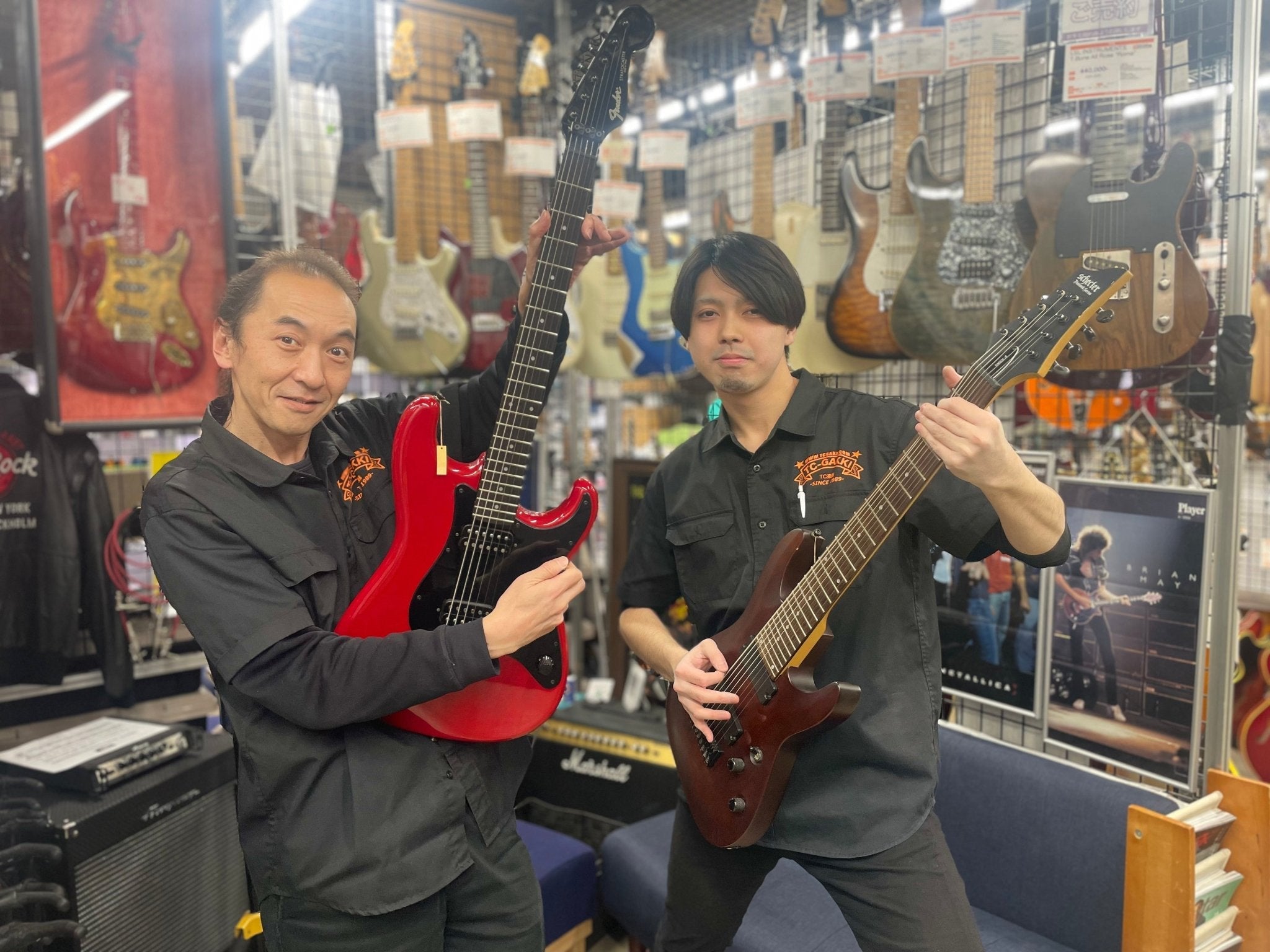
This is Koyamauchi, the “Metalhead” from TCGAKKI Instrument Repair!
This might come out of the blue, but
Do you think there’s a difference between “Me↑tal” and “Me↓tal”?
I know this might seem like I’m rambling out of the blue, but please bear with me—this article is pretty much just for fun.
First, try saying “heavy metal.”
Next, try saying “metalcore.”
What do you think?
The intonation of “metal” is different, isn’t it?
"Heavy Metal" is "Me↑tal."
"Metalcore" is "metal↓."
I think that’s how it goes.
It sounds weird if you pronounce it the other way around, doesn’t it?
Is there actually a difference between these two types of metal?
“Come on, there are way more types of metal than that!”
You’re absolutely right.
If I go too broad, I’ll lose focus, so I’m limiting this to just these two.
Let me say it again: this is just for fun. I’d appreciate it if you could read this with a sense of humor.
Heavy metal is a style of rock that developed from the late ’60s through the ’70s.
As the name suggests, it features a heavy sound with plenty of riffs and fast guitar solos.
In contrast, metalcore is said to have evolved from heavy metal and hardcore, blending elements from various genres.
Both terms are used when categorizing these as broad genres, right?
From a genre perspective, I wonder if there are any differences.
So, are there differences in the guitars typically used for each style of metal?
When it comes to brands commonly associated with heavy metal, there are tons, but “Gibson,” “Jackson,” “Charvel,” and “Kramer” probably come to mind.
Not only do they typically come equipped with humbuckers, but I get the impression that many of them feature Floyd Rose tremolos and 24 frets.
What about metalcore?
“Ibanez,” “Schecter,” “ESP, E-II, LTD,” and “MusicMan,” perhaps?
There are more, but let’s leave it at that for now.
Here, too, the approach of using humbuckers with distortion remains the same.
Fixed bridges and Floyd Rose systems are common, and 24-fret models are frequently used.
Since the tuning is dropped quite low, I get the impression there are many multi-string guitars and models with long scales.
That’s a pretty rough overview—what do you think?
While there are changes based on trends over time, I feel the fundamentals remain the same.
Of course, not all guitars fit this mold—various bands across all genres use a wide variety of guitars.
It’s not like “this brand is for heavy metal” or “that brand is for metalcore.”
What I mean is that there’s no difference between “Metal↑” and “Metal↓” when it comes to guitars.
I use the intonation differences—like “Me↑tal” and “Me↓tal”—to express these broad genre distinctions within metal, but this is just my personal way of expressing it; it’s not a set rule.
So be careful when someone tells you they like “Me↑tal”—it might actually be “Me↓tal.”
Asking fellow metalheads, “What’s your favorite genre?” can be pretty risky.
“It’s [X] metal.”
“If it’s [X] metal, [Y] is pretty good, right?”
“Strictly speaking, isn’t that △△ metal?”
“Huh???”
Exchanges like this aren’t exactly rare.
Let’s put an end to this.
Metalheads have argued among themselves way too much.
“This is metal,” “That’s not metal,” and so on.
I think disputes over genre differences will continue to happen.
But when it comes to the guitar, I’d like us to enjoy it purely, without getting into those kinds of arguments.
I encourage you all to try enjoying metal with a variety of guitars.
If you do, a whole new kind of metal might just emerge.
Koyamauchi